
About the Company
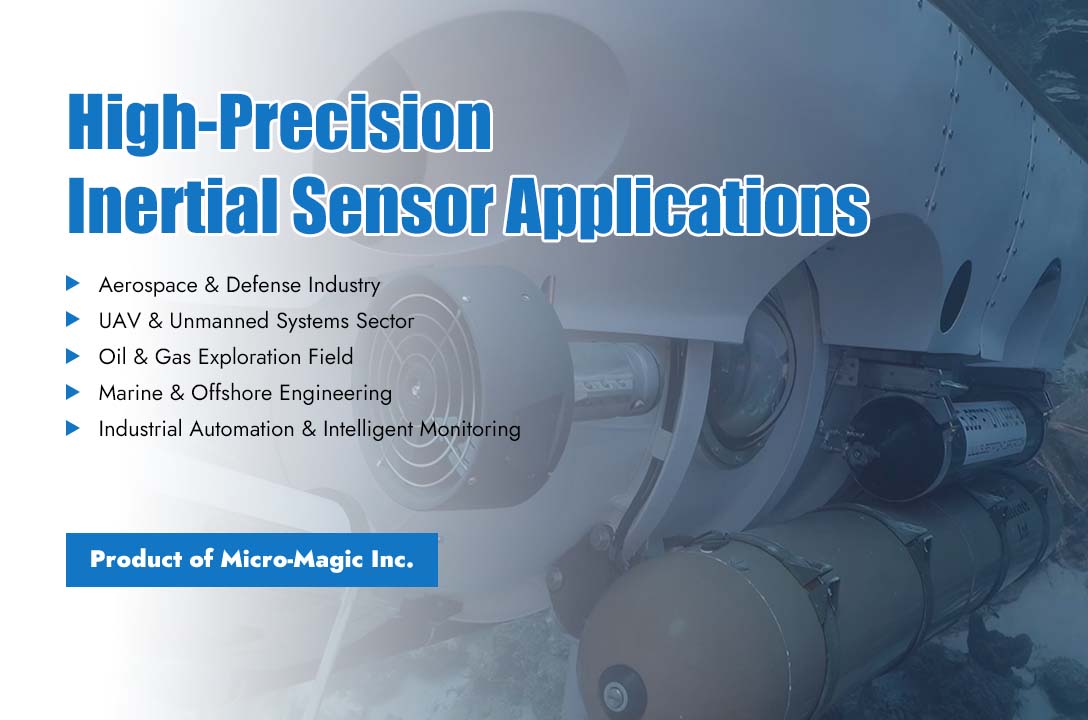
As a vertically integrated original manufacturer of inertial sensing technology, Micro-Magic Inc has built a comprehensive industrial layout covering aerospace, unmanned aerial vehicles (UAVs), oil and gas exploration, marine engineering, and industrial automation. Leveraging self-developed f...
Read More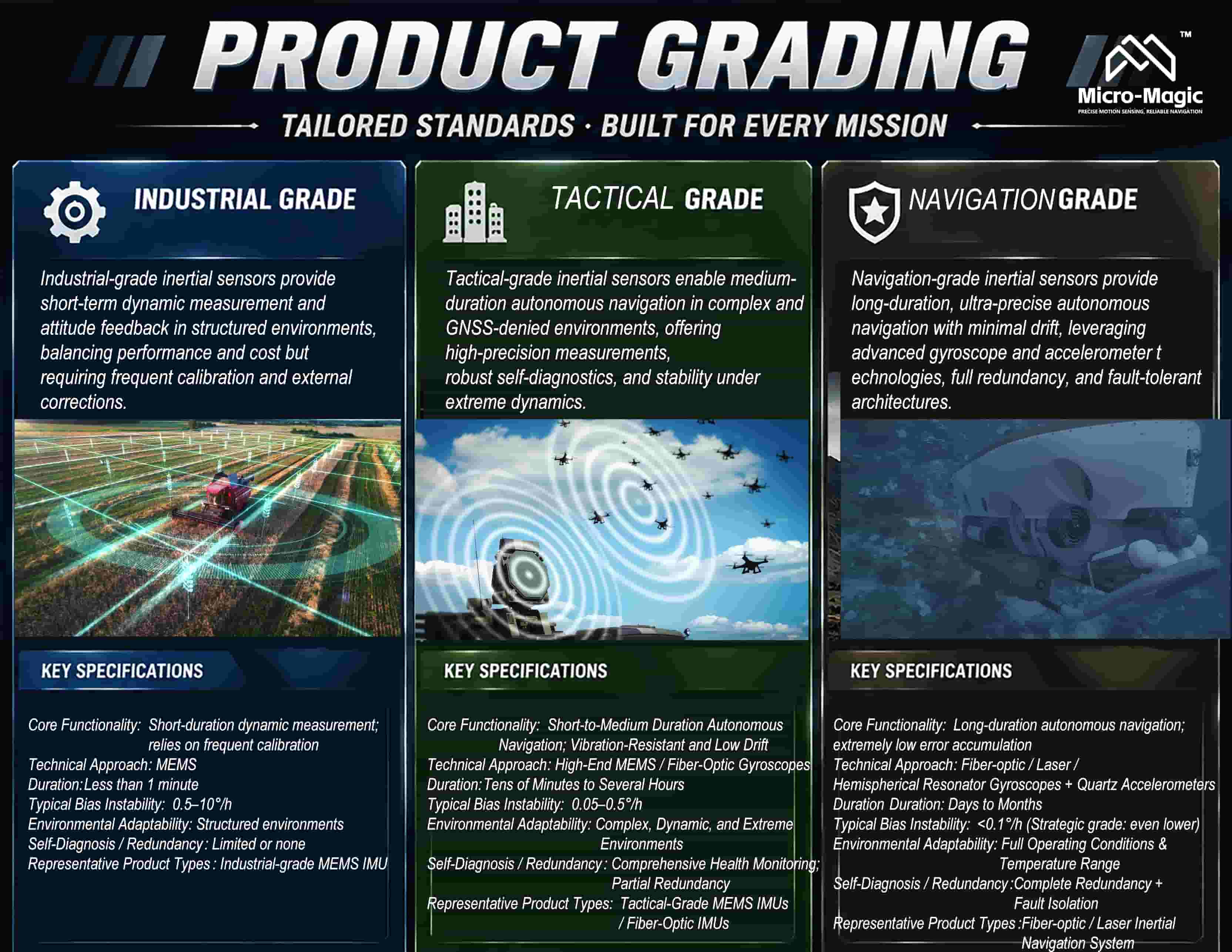
The classification of inertial sensors is, in essence, determined by the duration for which they can maintain autonomous inertial navigation accuracy in the absence of external corrections (such as GNSS). Different grades correspond to distinct hardware architectures, signal processing...
Read More
Inertial sensor original manufacturers—operating under the IDM (Integrated Device Manufacturer) model, which entails in-house R&D and manufacturing—realize a "full-link" advantage. This advantage represents not merely a closed loop in technical methodology, but a profound transformat...
Read More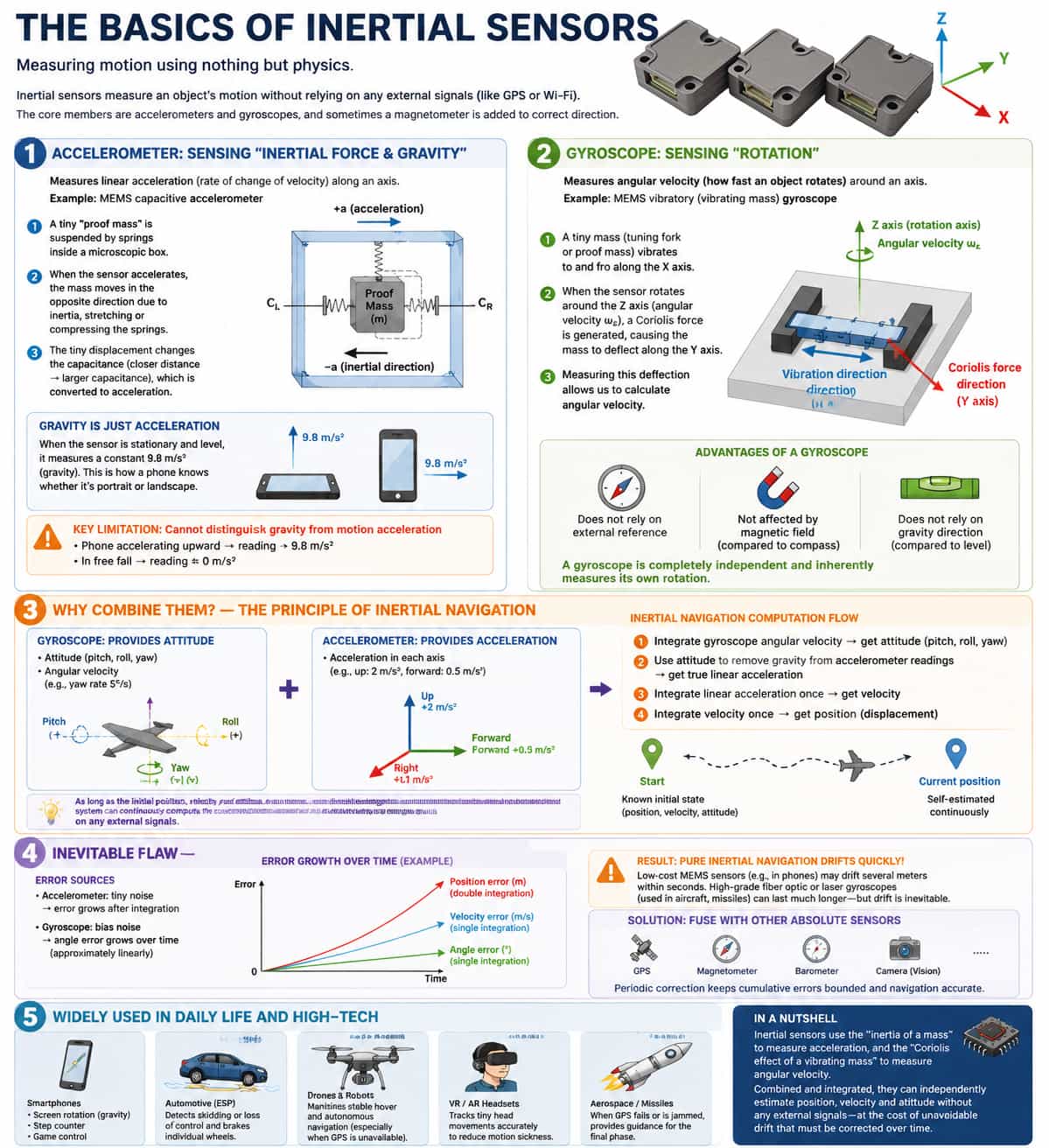
An inertial sensor is a device capable of measuring an object's motion state in space solely by relying on intrinsic physical laws, without depending on any external signals (such as GPS or Wi-Fi). Its core components are accelerometers and gyroscopes; these devices frequently work in tandem, someti...
Read More
I. Brief Overview of IMU Underlying Architecture The core hardware of an Inertial Measurement Unit (IMU) consists of accelerometers and gyroscopes, which measure linear acceleration and angular velocity, respectively. Industrial-grade and higher-tier IMUs typically employ MEMS technology, while hig...
Read More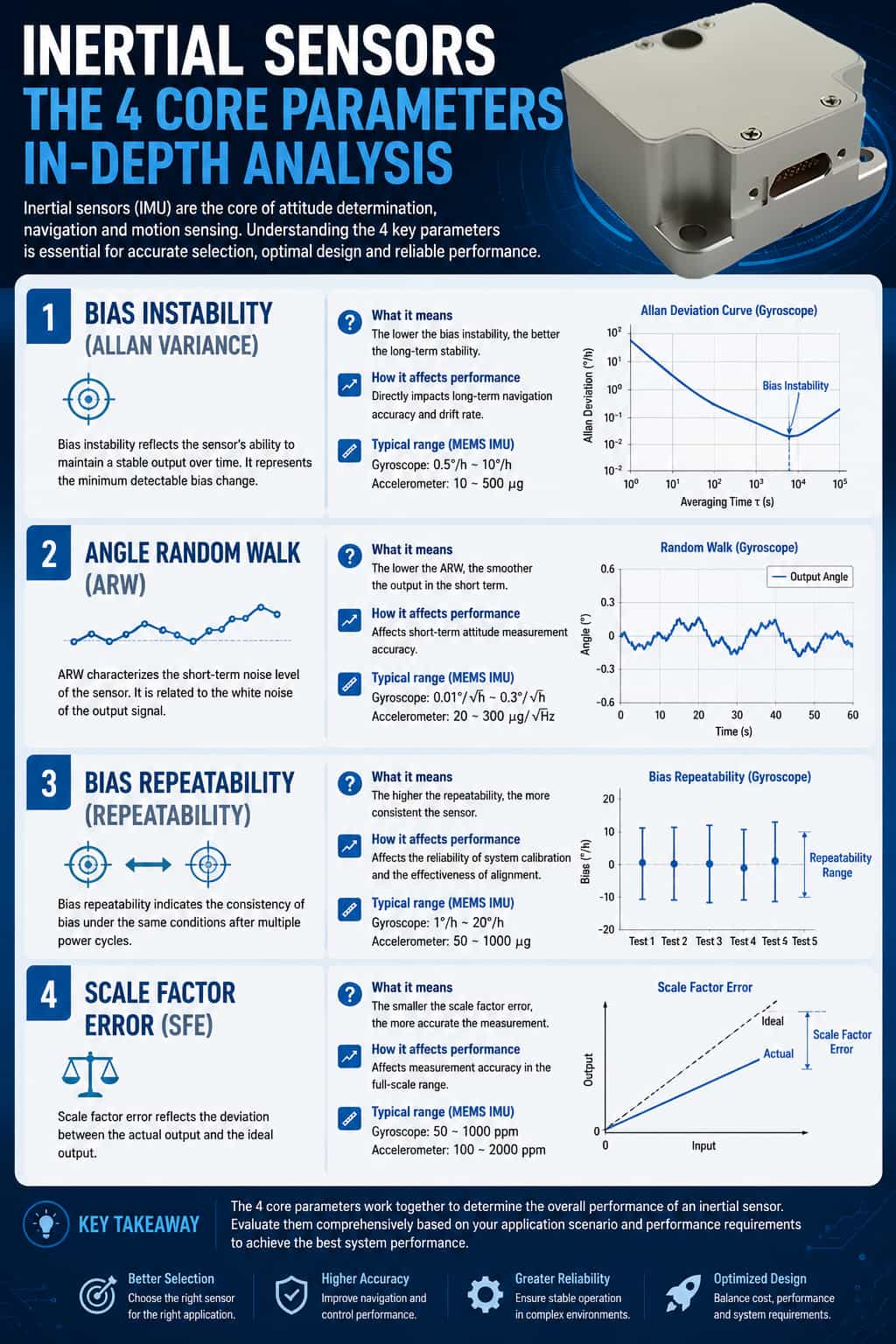
In the fields of inertial navigation, motion control, and high-precision attitude measurement, the performance of inertial sensors (gyroscopes and accelerometers) directly determines the upper limit of the entire system's accuracy. For engineers, understanding the practical significance of key para...
Read More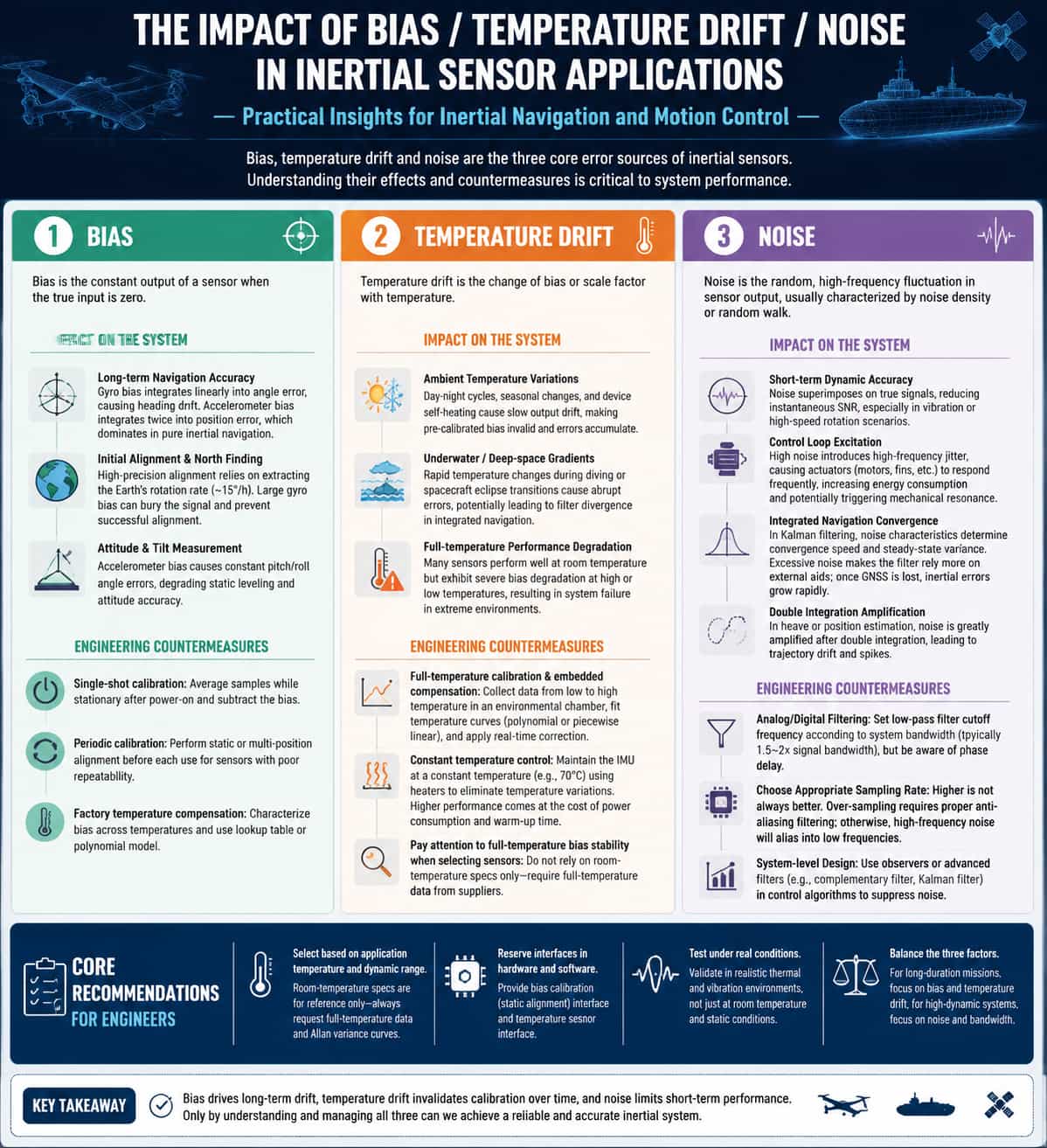
In inertial navigation and motion control projects, sensor bias, thermal drift, and noise are the three core error sources affecting system performance. The following section outlines their manifestations, impact on the system, and mitigation strategies from an engineering perspective. 1. Bia...
Read More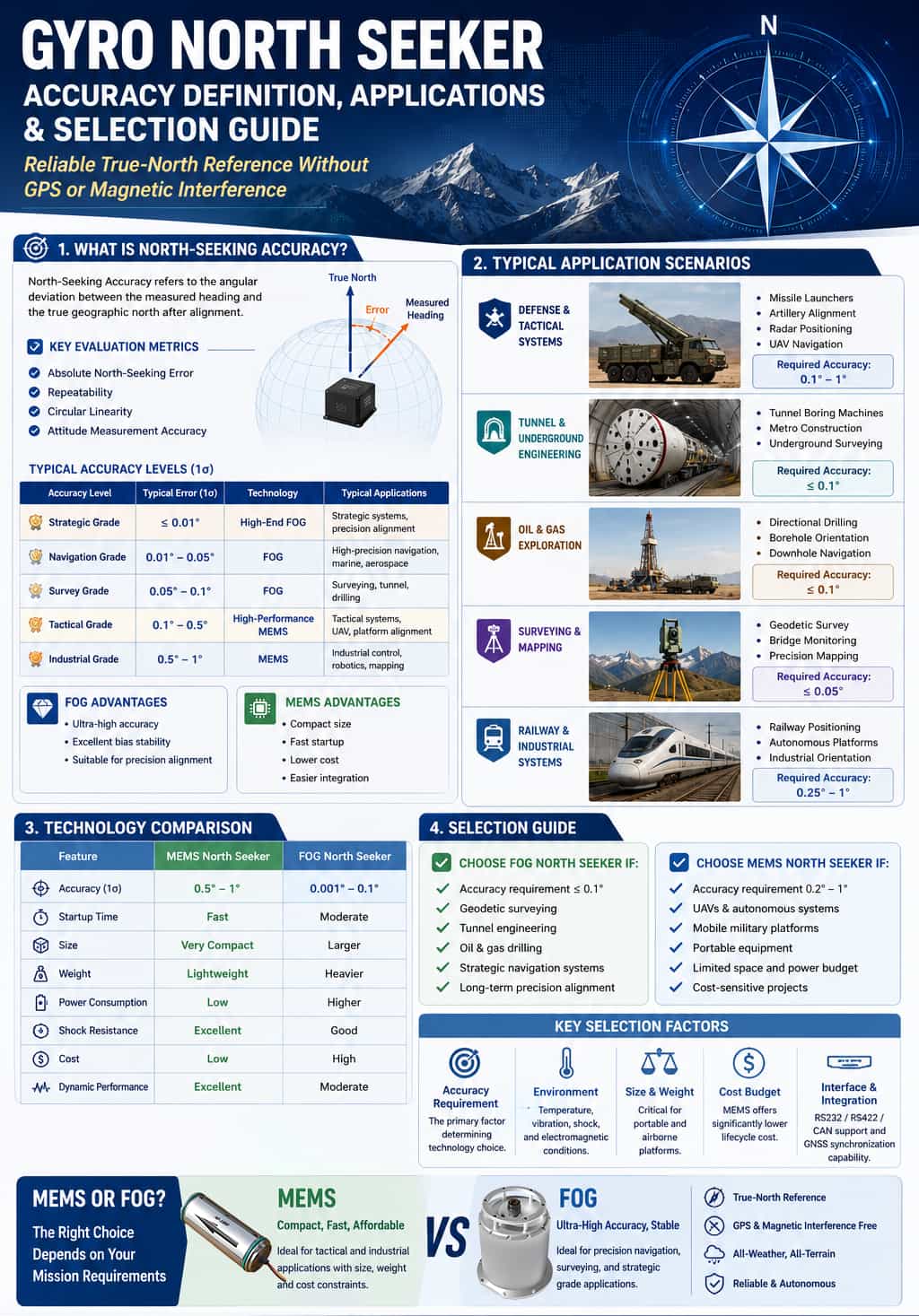
A gyro north-finder is an inertial measurement device that utilizes the gyroscopic effect to sense the Earth's angular velocity of rotation, thereby autonomously determining the direction of true north. Unaffected by external magnetic fields and independent of satellite signals such as GPS, it prov...
Read More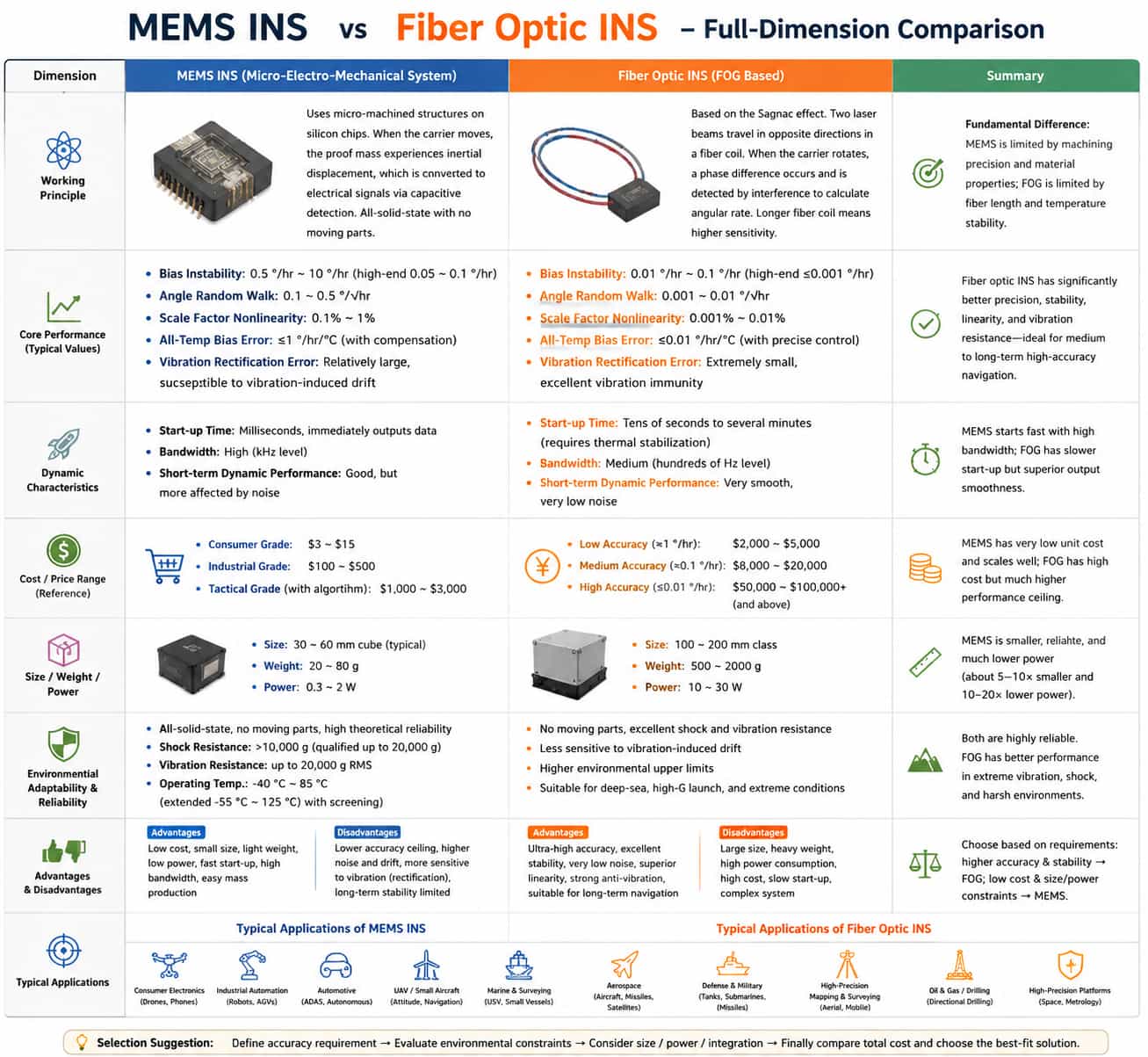
Current mainstream technical approaches for inertial navigation systems fall into two categories: MEMS-based inertial navigation (utilizing Micro-Electro-Mechanical Systems) and fiber-optic inertial navigation (based on optical interference principles). These two technologies differ fundamentally i...
Read More
1. Introduction: Technological Landscape and Market Overview of Inertial Navigation Systems As an autonomous navigation technology that does not rely on external signals, Inertial Navigation Systems (INS) are experiencing unprecedented growth driven by the rapid advancement of frontier technologies...
Read More
Xml Privacy Policy Blog Sitemap
copyright @ Micro-Magic Inc All Rights Reserved.
 Network Supported


 English