
Inertial Navigation Systems (INS), centered on gyroscopes and accelerometers, operate autonomously without relying on external signals to provide continuous navigation data—a capability that offers irreplaceable advantages for unmanned platforms and specialized operational fields. However, as these systems transition from the laboratory to real-world battlefields or operational sites, intense vibration and high-impact forces emerge as the primary factors limiting both their accuracy and service life. While unmanned aerial vehicle (UAV) operations, measurement-while-drilling (MWD) in downhole environments, and the use of heavy construction machinery all fall under the category of "high-impact operating conditions," their specific environmental characteristics and adaptation requirements differ significantly. Understanding these distinctions is a prerequisite for effective, targeted design.
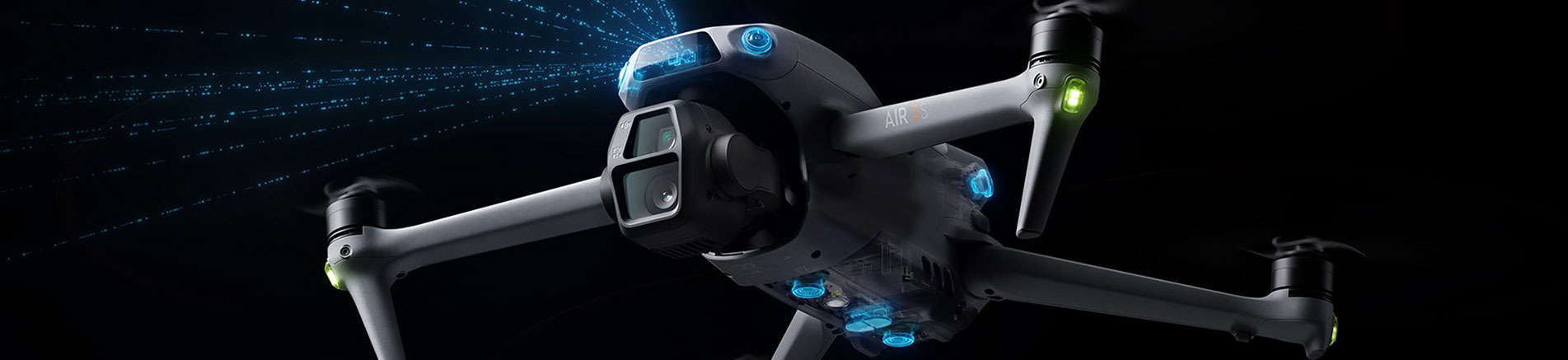
In UAV applications, vibrations primarily stem from the high-frequency rotation of motors or engines and the aerodynamic disturbances caused by propellers, resulting in complex, persistent spectral components. Furthermore, the impact of landing, catapult-assisted takeoffs, or the release of mission payloads can induce transient, high-G shocks. For such lightweight platforms, the core requirement for an INS is to maintain dynamic accuracy within strict constraints on size and power consumption, while also balancing cost and ease of integration. Given that UAVs are extremely sensitive to weight, any vibration-damping structure must be implemented within a limited mass budget; excessive reinforcement would otherwise compromise operational endurance.
Measurement-while-drilling (MWD) represents the most extreme operational environment. Axial and lateral shocks generated by the drill bit as it breaks through rock can reach levels of 200g to 2000g, accompanied by broadband random vibrations of up to 18grms, all while subjected to temperatures exceeding 150°C and mud pressures of several tens of megapascals. The INS is housed within a drill collar, where space is severely restricted and routine maintenance is impossible. In this context, the priorities for system adaptation are: survivability > high-temperature reliability > measurement accuracy. While some compromise on accuracy may be acceptable, the failure of a sensor would lead to the collapse of drilling operations, potentially resulting in losses of hundreds of thousands of dollars.
The vibration characteristics encountered by heavy construction machinery—such as excavators, cranes, mining trucks, and road pavers—fall somewhere between those of the two scenarios described above. Low-frequency engine vibration and impact loads from working implements (such as buckets or booms) serve as the primary sources of excitation. Peak acceleration typically ranges from 10g to 50g—lower than what is encountered in underground mining operations, yet higher than that experienced by standard road vehicles. The operating environment is characterized by frequent, repetitive mechanical movements, drastic changes in orientation, high levels of dust and humidity, and significant temperature fluctuations. In this context, the core function of an inertial navigation system (INS) is to provide a reliable attitude reference and anti-rollover warnings amidst rough, intensive operations; consequently, real-time performance and robustness are prioritized over absolute precision.
The distinct requirements of these three scenarios dictate specific adaptation strategies for inertial navigation systems:
For drone-based applications, the adaptation strategy focuses on lightweight vibration isolation and algorithmic compensation. Physically, the IMU module is isolated from the airframe using miniature elastic damping materials, with the natural frequency of the isolators carefully selected to avoid the primary operating frequencies (and their harmonics) of the motors. Algorithmically, the system leverages acceleration feedback from the drone’s flight controller to identify dominant vibration frequencies in real time, employing adaptive notch filters to suppress interference. Recent approaches have also explored the "tight coupling" of the IMU with other sensors—such as vision systems and barometers—using visual features to provide attitude constraints during periods of intense vibration, thereby reducing reliance on the accuracy of pure inertial navigation.
For underground "while-drilling" applications, the focus shifts to hardware hardening and redundancy-based fault tolerance. Accelerometers and gyroscopes must feature high-range, closed-loop architectures and incorporate mechanical limit stops to withstand extreme impacts. To manage high temperatures, the enclosure utilizes a thermal management strategy that combines insulation layers with dedicated heat-conduction paths. At the system level, a triple-redundant IMU configuration is standard; if one sensor produces anomalous output due to an impact, the system automatically isolates the faulty channel via majority voting or residual monitoring mechanisms. Furthermore, these systems employ "zero-velocity updates" (ZUPT)—calibrating sensor bias during the brief pauses in drilling (such as when adding a new drill pipe) to effectively mitigate cumulative drift caused by vibration.
For construction machinery, the adaptation strategy prioritizes environmental protection and operational adaptability. An IP67 or higher ingress protection rating is the baseline requirement to withstand dust exposure and high-pressure water washdowns. Given the intense angular motion triggered by the extension and retraction of booms during operation, the gyroscope’s measurement range must include a sufficient safety margin (typically selecting a range of at least ±300°/s). To counter the degradation of zero-point stability caused by frequent impacts, the system should incorporate an automatic zero-calibration routine, refreshing the bias during brief operational windows—such as when the engine is idling or the working equipment is stationary. Furthermore, inertial navigation outputs are commonly fused with data from GNSS receivers and inclinometers to establish a safety monitoring system; this triggers an immediate alert if the vehicle’s tilt exceeds a defined threshold, thereby preventing rollovers.
Despite the diversity of operational environments, the adaptation of inertial navigation systems across these three categories follows several common principles: physical isolation takes precedence over algorithmic correction—structural vibration damping serves as the primary line of defense, and algorithmic compensation can only be effective when built upon such a foundation. A trade-off between measurement range and accuracy is necessary; sensors with higher ranges often sacrifice some resolution and zero-bias stability, so selection must balance the relative importance of peak impact tolerance against navigation precision. Additionally, full-temperature-range calibration is essential; because the combined effects of vibration and high temperatures significantly alter a sensor’s error model compared to room-temperature conditions, factory calibration must encompass the entire expected operating temperature range.
While drones prioritize being "lightweight and precise," underground equipment demands "ruggedness and stability," and construction machinery requires "durability and practicality." Adapting inertial navigation systems for these high-impact environments is, at its core, a quest for the optimal balance between accuracy, survivability, size/power consumption, and cost. As MEMS technology continues to evolve—pushing toward both higher measurement ranges and lower noise levels—and as multi-source fusion navigation algorithms mature, a new paradigm is likely to emerge: standardized IMU hardware paired with application-specific software. This approach promises to meet the requirements of increasingly diverse, high-impact operational scenarios at a lower cost.
leave a message
Scan to Wechat :