
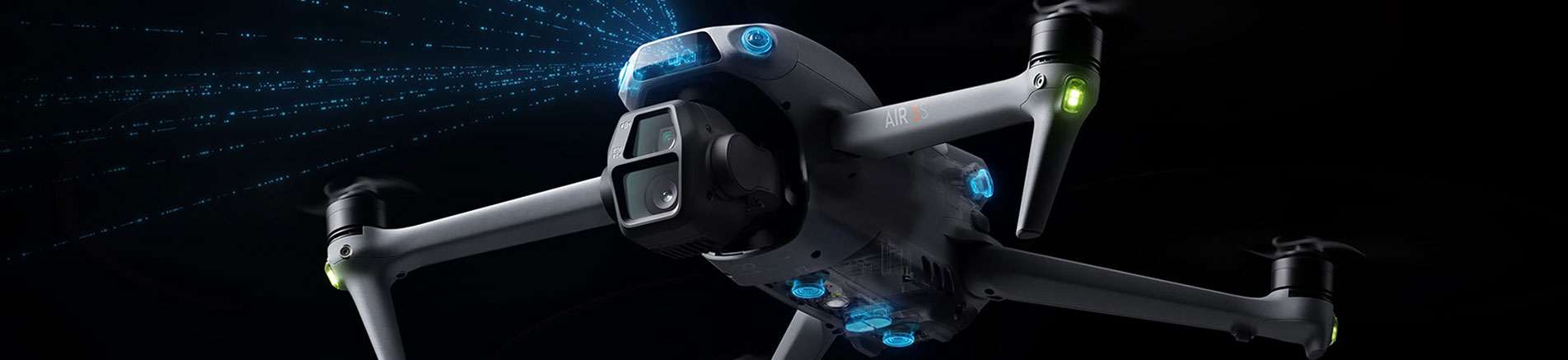
High-precision Inertial Measurement Units (IMUs) are core sensors for attitude sensing and autonomous navigation in moving platforms. In complex application scenarios—such as industrial drones, autonomous driving, mobile mapping, and underwater navigation—systems impose rigorous requirements regarding IMU accuracy, dynamic response, environmental resilience, and data synchronization capabilities. The U4930 series six-axis MEMS inertial measurement module from Micro-Magic Inc. offers a mature and reliable inertial sensing solution for these applications, featuring tactical-grade inertial specifications, precise full-temperature compensation, high-bandwidth output, and a compact, lightweight design.
**Key Technical Features of the U4930**
The U4930 integrates a high-performance three-axis MEMS gyroscope and a three-axis MEMS accelerometer. It features internal calibration and compensation across the full operating temperature range (-40°C to +80°C) for bias, scale factor, non-orthogonality errors, and acceleration-sensitive terms. The gyroscope offers a measurement range of ±400°/s to ±500°/s (depending on the model), with bias stability (10s smoothing) better than 0.3°/h and angular random walk as low as 0.02°/√h. The accelerometer features a ±30g range, bias stability better than 50μg, and velocity random walk ≤0.03 m/s/√h. The module measures just 64.8 × 47 × 35.3 mm and weighs approximately 130g, with a steady-state power consumption of ≤2W. It supports data output rates up to 2000Hz and offers robust performance, including 6.06g RMS vibration resistance and 500g/1ms shock resistance.
These specifications demonstrate that the U4930 achieves tactical-grade MEMS IMU standards, capable of maintaining measurement accuracy under harsh conditions—such as high dynamics, wide temperature ranges, and intense vibration—thereby laying the foundation for its deployment across diverse application scenarios. Technical Adaptation Analysis for Typical Application Scenarios
(1) Industrial Drones: High-Dynamic Attitude Reference and Dead Reckoning
Industrial drones require real-time, high-update-rate attitude data (roll, pitch, and yaw) for stable flight control and autonomous navigation. The U4930’s 2000 Hz data output rate ensures precise capture of the airframe's transient angular motion, while its angular random walk (as low as 0.02°/√h) effectively suppresses the rate of attitude integration drift. The module supports time synchronization with GNSS receivers (via PPS input and GPRMC message parsing), enabling loosely or tightly coupled integrated navigation; it maintains trajectory continuity through pure inertial dead reckoning during brief GNSS signal outages—a capability critical for tasks such as power line inspection and long-endurance surveying.
(2) Autonomous Vehicles: Continuous Positioning in Complex Operating Conditions
For autonomous vehicles operating in environments where GNSS signals are obstructed—such as urban canyons, tunnels, and underground parking garages—the IMU becomes the core component for dead reckoning. The U4930’s bias stability (0.3°/h) and low-noise characteristics ensure that positional drift remains within acceptable limits over periods of tens of seconds. Its full-temperature-range compensation mechanism guarantees consistent performance despite temperature fluctuations in the engine compartment (-40°C to 80°C), while its 6.06g vibration resistance effectively mitigates measurement disturbances caused by road bumps and engine vibrations. A tiered precision lineup (Models A, B, and C) allows systems ranging from L2+ to L4 autonomy—and with varying budget constraints—to access inertial performance tailored to their specific needs.
(3) Mobile Mapping and Track Inspection: High-Precision Spatiotemporal Reference Synchronization
Vehicle-mounted or airborne LiDAR systems require IMUs to provide high-precision attitude and position references to ensure the accuracy of 3D point cloud registration. The U4930’s low angular random walk (≤0.02°/√h) directly translates to reduced point cloud drift, a factor that is particularly crucial for long-distance data acquisition missions. Additionally, its TOV differential synchronous pulse output and PPS input capabilities enable strict synchronization between IMU sampling moments and GNSS one-pulse-per-second (PPS) signals, providing precise trigger signals for point cloud timestamping. In railway track inspection, the module can be integrated with an odometer and GNSS to form a combined measurement system capable of detecting track irregularities with millimeter-level precision.
(4) Autonomous Underwater Vehicles (AUV): Long-duration dead reckoning in GNSS-denied environments
Underwater environments preclude GNSS signal reception, forcing AUVs to rely entirely on their internal inertial systems for long-duration pose estimation. The U4930’s tactical-grade gyro bias stability (as low as 0.3°/h) and low angular random walk effectively suppress the accumulation of attitude errors over time, thereby extending the vehicle's effective underwater operational duration. Its aluminum alloy structural design, shock resistance (500g), and wide storage temperature range (-55°C to 85°C) ensure it can withstand the mechanical stresses associated with the assembly and transport of deep-sea equipment.
(5) Satcom-on-the-Move (SOTM): Closed-loop stable antenna tracking
In vehicle-, ship-, or airborne SOTM systems, the IMU must provide instantaneous carrier attitude changes with low latency to drive servo mechanisms for antenna pointing compensation. The U4930’s bandwidth of ≥200 Hz ensures rapid attitude signal tracking, while its RS422 differential interface offers robust interference resistance, making it suitable for communication platforms operating in complex electromagnetic environments. When paired with external PPS synchronization, it provides a precise time reference for the antenna pointing control loop, ensuring communication link stability even during sharp turns or disturbances caused by wind and waves.
Expanded application scenarios through environmental adaptability
The U4930 operates within a temperature range of -40°C to 80°C and supports storage temperatures from -55°C to 85°C, ensuring reliable startup and operation in extreme cold, intense heat, and high-humidity conditions. Its vibration and shock resistance make it suitable not only for vehicle- and airborne applications but also for deployment on small vessels, unmanned ground vehicles (UGVs), and in certain industrial robotics scenarios. Furthermore, the module features a startup time of ≤2 seconds and supports in-field software upgrades, facilitating on-site maintenance and functional updates.
In summary, the U4930 series MEMS IMU—characterized by tactical-grade inertial performance, precise compensation across the full temperature range, high-speed data output, and robust environmental adaptability—is ideally suited for demanding applications such as industrial drones, autonomous driving, mobile mapping, underwater navigation, and SATCOM-on-the-move. Its tiered accuracy options offer users flexibility in balancing cost and performance. As inertial navigation systems evolve toward miniaturization, low power consumption, and high reliability, the U4930 leverages its comprehensive technical specifications to provide a solid hardware foundation for attitude sensing and autonomous positioning across a wide range of mobile platforms.
leave a message
Scan to Wechat :