
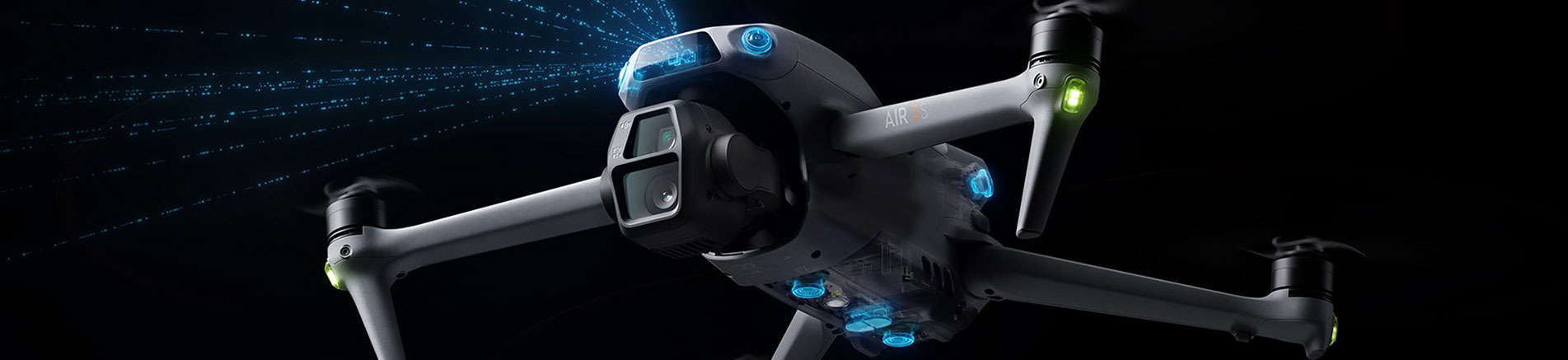
The demand for lightweight inertial navigation systems (INS) in micro-drones, FPV (first-person view) racing drones, and small unmanned surface vessels is, at its core, an intense pursuit of a "sensory nervous system" for motion. Constrained by SWaP-C (Size, Weight, Power, and Cost) limitations, these systems cannot accommodate expensive fiber-optic or laser gyroscopes; instead, they must strike a delicate balance between precision, physical dimensions, and computational power. This challenge is driving a shift in inertial navigation technology—moving away from mere "performance compromises" toward "architectural innovation."
In micro-scale platforms, MEMS-based inertial navigation is evolving from a simple "sensor" that provides attitude references into the "central hub" of the navigation architecture. While standard flight controllers rely on 6-axis IMUs for attitude estimation, the requirements diverge significantly between racing and long-range/autonomous inspection applications. Racing drones prioritize ultra-low latency, often stripping away peripheral sensors like barometers and magnetometers to boost responsiveness. Conversely, long-range or autonomous inspection platforms must integrate multi-source data—utilizing non-linear algorithms (such as the Sigma-Point Kalman Filter, or SPKF) to fuse inputs from GNSS, barometers, and even visual sensors—to maintain positioning capabilities in GPS-denied environments.
This shift places higher demands on hardware. To achieve centimeter-level positioning, a gyroscope’s bias instability must be better than 0.5°/h, and the accelerometer bias must be in the range of 20 µg. Domestic manufacturers have achieved breakthroughs in processes like wafer-level vacuum packaging, pushing MEMS sensor yields above 90% while reducing costs by 80%—effectively clearing the path for the mass adoption of lightweight inertial navigation systems.
The inherent precision limits of hardware must be overcome through advanced algorithms. For highly maneuverable platforms like FPV racing drones, relying solely on a barometer for altitude control is problematic, as it is highly susceptible to airflow interference. By employing a Kalman filter-based altitude estimation algorithm—which fuses data from gyroscopes, accelerometers, and barometers—and incorporating the rotation vector method to avoid the "gimbal lock" (singularity) issues associated with Euler angles, these systems can maintain stable altitude even when flying at low altitudes (below 1 meter) or in strong outdoor winds. Small unmanned surface vessels (USVs) face unique challenges: they operate amidst intense dynamic disturbances on the water surface, and while MEMS-based inertial navigation systems (INS) are cost-effective, they inherently lack sufficient heading accuracy. By incorporating single-axis rotational modulation, gyro drift can be effectively mitigated, enhancing heading-retention capabilities without increasing the system's size or weight. In underwater environments, where traditional INS solutions are often too bulky or costly for small unmanned underwater vehicles (UUVs), MEMS-based attitude and heading reference systems (AHRS)—integrated with magnetometer data—offer an optimal solution to bridge this gap.
The future of lightweight inertial navigation lies in deep integration with edge AI. Research indicates that TinyML models can be deployed on resource-constrained platforms, such as the Cortex-M4, to process acceleration data via a sliding window. This enables the real-time identification of eleven distinct motion states with an inference latency of just 18ms. Such capabilities allow inertial navigation systems to move beyond mere "motion sensing" toward "intent understanding," providing higher-level semantic support for purely inertial-based positioning.
In the foreseeable future, as emerging technologies—such as interferometric fiber-optic gyroscopes—undergo further miniaturization, positioning accuracy could reach the 10cm level. Lightweight inertial navigation systems will thus approach tactical-grade performance while maintaining a compact form factor, serving as a critical catalyst for unlocking the autonomous potential of micro-unmanned systems.
leave a message
Scan to Wechat :