
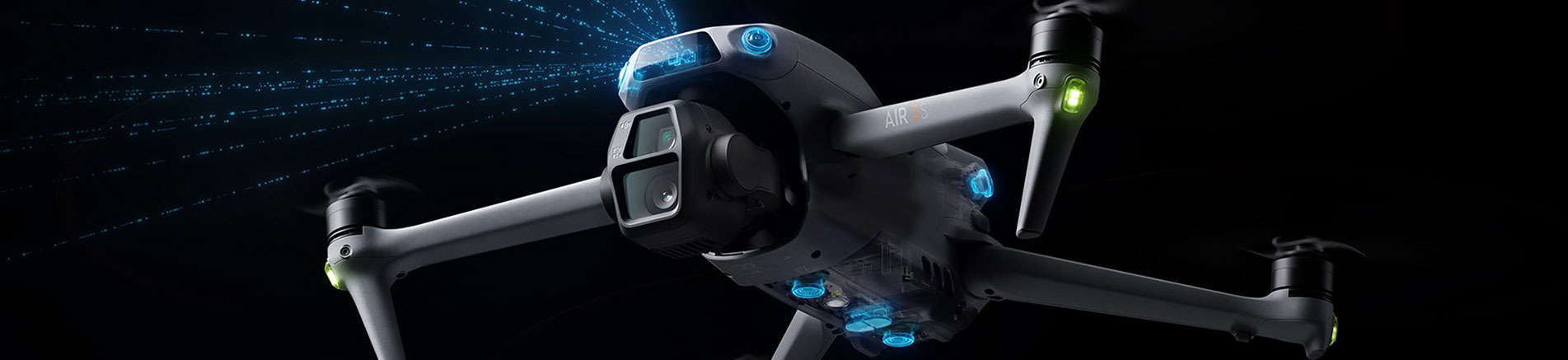
In modern aerial combat and reconnaissance systems, airborne electro-optical (EO) pods have become critical payloads for situational awareness, precise target localization, and weapon guidance. Their operational effectiveness relies heavily on an onboard inertial navigation system (sub-INS)—or "sub-inertial system"—to provide real-time, high-precision data on attitude, velocity, and position. However, due to constraints in cost, size, and power consumption, these sub-INS units typically utilize lower-precision inertial measurement units (IMUs), which are prone to rapid error accumulation over time. Consequently, employing "transfer alignment" (on a moving base)—leveraging high-precision data from the host aircraft’s primary inertial navigation system (master INS)—is a core technical enabler that allows the pod system to achieve rapid startup, enter operational status quickly, and maintain high navigational accuracy.
Because EO pods are mounted on an aircraft’s wings or fuselage, their internal inertial navigation systems cannot undergo the lengthy, static-base self-alignment processes used by ground-based systems. Transfer alignment technology was developed specifically to address this challenge. Its fundamental principle involves constructing a Kalman filter model—based on discrepancies in velocity, attitude, and other observables between the master INS and the sub-INS—to estimate and compensate for critical state variables, such as installation misalignment angles and gyroscope drift, in real time.
For EO pod applications, the value of transfer alignment lies in the following:
(1) Eliminating Ground Dependency: It enables alignment to be performed in-flight after the aircraft has taken off, significantly enhancing sortie efficiency and battlefield survivability, while meeting the tactical requirement for "rapid startup."
(2) Leveraging Maneuvers to Enhance Observability: Research and operational experience demonstrate that specific maneuvers by the host aircraft—such as flying a "figure-eight" pattern—can effectively improve the observability of the system’s state variables. This accelerates filter convergence and enhances alignment precision.
(3) Compensating for Dynamic Errors: Advanced transfer alignment algorithms can effectively account for complex error sources, including the lever-arm effect, time delays in master INS data, and structural flexure of the airframe, ensuring that the pod maintains a stable attitude reference even during high-dynamic flight.
Modern air combat is highly dynamic, demanding that pod systems possess a "plug-and-play" rapid response capability. Rapid start-up technology encompasses the optimization of the entire process—from initial system power-up to the reliable output of navigation data.
Its core value lies in:
(1) Reducing mission preparation time: By optimizing alignment procedures and algorithms, the alignment process—which traditionally requires a significant amount of time—can be completed in just a few minutes. This enables pilots to rapidly enter a combat zone or execute strikes against time-sensitive targets.
(2) Enhancing system availability: Should a system require a restart or need to wake from a standby state, rapid start-up capability allows for the swift restoration of navigation functions, preventing mission interruptions or failures caused by a loss of navigation data.
Integrating "moving-base alignment" and rapid start-up technologies into pod systems yields significant gains in overall operational effectiveness. From a technical perspective, moving-base alignment eliminates the need for ground-based calibration, allowing the pod to autonomously acquire high-precision initial attitude data while airborne—directly enhancing both the survivability and the sortie rate of the host aircraft. Furthermore, by optimizing observability, the system can accelerate filter convergence during specific maneuvers, ensuring the stability and precision of the line-of-sight in the dynamic environments encountered at medium to high altitudes. Rapid start-up technology, meanwhile, focuses on minimizing the time interval between power-up and operational readiness, providing essential support for responding quickly to time-sensitive targets.
In summary, moving-base transfer alignment and rapid start-up technologies serve as the cornerstone for unlocking and unleashing the full operational potential of airborne pods. They not only resolve the fundamental limitations regarding the precision of a pod’s internal inertial navigation system (INS) but also empower the system to execute tasks with speed and accuracy within complex, dynamic environments. As advancements continue in filtering algorithms—such as observability-based adaptive filtering and cubature Kalman filtering—alongside the evolution of embedded real-time system architectures, these technologies will further drive airborne electro-optical pods toward higher levels of autonomy and intelligence, ensuring they play an indispensable role in the information-centric warfare of the future.
leave a message
Scan to Wechat :