
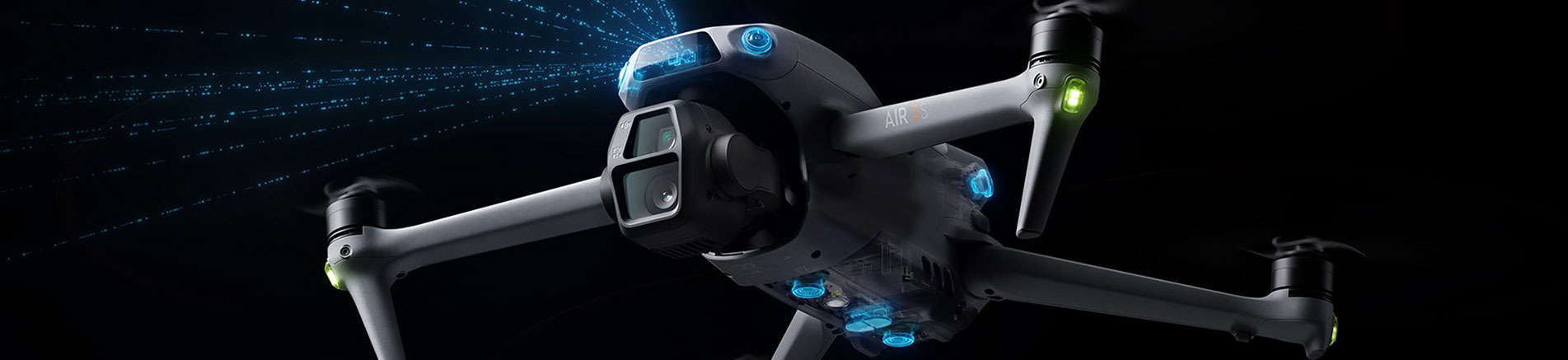
Modern electro-optical (EO) pods integrate a variety of sensors—such as high-resolution cameras, infrared thermal imagers, and laser rangefinders—with the primary mission of enabling high-precision detection, tracking, and targeting of objects from moving platforms (e.g., UAVs, helicopters, or naval vessels). This mission imposes extremely rigorous requirements on the pod’s attitude stabilization and pointing control. To maintain stable orientation amidst high-frequency dynamic disturbances, ensure zero-point stability during long-duration missions, and provide the rapid response capabilities needed for target acquisition and tracking, the Inertial Navigation System (INS)—which serves as the "sensory core" of the entire system—must deliver a correspondingly high level of performance.
During operation, an EO pod is continuously subjected to high-frequency vibrations from the host platform, aerodynamic disturbances, and the servo-driven motion of its own internal framework. The INS must accurately measure these transient angular motions to provide real-time feedback signals to the control system. This necessitates an Inertial Measurement Unit (IMU) with high-bandwidth sampling and output capabilities (typically in the range of several hundred Hertz) to ensure that high-frequency attitude data is captured without loss. Simultaneously, the system must exhibit ultra-low latency—ideally at the millisecond level—as any delay reduces the control phase margin, potentially leading to oscillations or instability. Furthermore, in highly dynamic environments, the inertial navigation algorithms must effectively compensate for dynamic errors such as "coning" and "sculling" motions to maintain the accuracy of velocity and position calculations.
In scenarios lacking external aids (for instance, when GNSS signals are jammed or obstructed), attitude errors within an INS will accumulate over time. For EO pods designed for extended endurance or long-range reconnaissance, the drift rate of the gyroscopes directly determines the system's ability to maintain accuracy independently. For example, tactical-grade applications typically require a gyroscope bias stability of within 1°/hr, while higher-end navigation-grade systems—such as those utilizing fiber-optic gyroscopes (FOG)—can achieve stability levels below 0.01°/hr. Low drift ensures that, even in "pure inertial" mode—where GNSS signals are unavailable—the pod can maintain line-of-sight stabilization that meets weapon-grade accuracy requirements for tens of minutes.
The pod must respond quickly to operational commands or angular velocity instructions generated by automatic tracking algorithms. The inertial navigation system (INS) must possess sufficient sensitivity and resolution regarding the carrier's angular motion to capture even the smallest control deviations. This necessitates the use of gyroscopes with low noise density and low angular random walk (ARW)—for instance, an ARW better than 0.1°/√hr—to prevent noise from obscuring the valid signal. Furthermore, system startup and initialization times are critical metrics for rapid tactical response; high-end systems are typically required to complete self-alignment and reach nominal accuracy within a few minutes.
Achieving the aforementioned performance levels relies on different inertial sensor technologies, with the selection process typically involving a trade-off between accuracy, size, power consumption, and cost. Inertial navigation systems based on Micro-Electro-Mechanical Systems (MEMS) technology feature gyroscopes with bias stability generally ranging from 0.05°/hr to 3°/hr. These systems offer high bandwidth and rapid dynamic response, while also being compact, cost-effective, and consuming less than 1 watt of power. Consequently, they are widely used in pods for small-to-medium unmanned aerial vehicles (UAVs)—where size, weight, and power (SWaP) are critical—and are particularly well-suited for short-duration missions supported by GNSS. In contrast, high-end inertial systems based on Fiber-Optic Gyroscope (FOG) technology offer superior accuracy, with gyroscope bias stability reaching the 0.003°/hr to 0.5°/hr range. However, the optical components require thermal management, which pushes total system power consumption above 10 watts, while also significantly increasing both size and cost. Such solutions are typically deployed in pods for manned aircraft or large UAVs that require long endurance and high precision; their low-drift characteristics allow them to maintain an independent attitude reference for extended periods—even in GNSS-denied environments—making them the preferred choice for strategic-level missions.
The operational deployment of electro-optical (EO) pods imposes a multifaceted set of requirements on inertial navigation systems (INS): high-frequency response, ultra-low drift, and rapid startup. System designers must conduct rigorous engineering trade-offs—tailored to specific mission profiles—to balance these performance metrics against SWaP (Size, Weight, and Power) constraints. Whether utilizing advanced MEMS technology or traditional FOG (Fiber-Optic Gyroscope) solutions, the core objective of the INS remains constant: to provide a rock-solid, absolute reference frame for the pod’s "all-seeing eye," ensuring stability regardless of the dynamic environment.
leave a message
Scan to Wechat :