
Should I choose quartz flexible accelerometer or MEMS accelerometer?


Author
21221
In the quest for the ultimate relaxation experience, our sofas are designed with your well-being in mind. Every curve and cushion is engineered to support and embrace your body's contours, creating a sense of comfort that feels tailor-made. We delve deep into the science of seating to ensure that with every moment you spend on our sofas, you feel the world melt away. Build all at once or add on over time. If you change your space, you can always change the shape.
Marie R. Winters


Key Points
Quartz Accelerometer
- Pros: High accuracy, stable, wide range, robust
- Cons: Larger, expensive, high power
- Best for: Precision applications (e.g., aerospace)
MEMS Accelerometer
- Pros: Compact, low cost, low power
- Cons: Lower accuracy, limited range
- Best for: Consumer electronics, portable devices
Conclusion
- Quartz: For high precision
- MEMS: For cost-effective, compact solutions
Choosing between a quartz flexible accelerometer and a MEMS accelerometer depends on specific application requirements. Here are some key factors to consider:
1. Quartz Flexible Accelerometer
Advantages:
1) High Accuracy and Stability: Quartz accelerometers are known for their high precision and long-term stability, making them suitable for applications requiring precise measurements over extended periods.
2) Wide Dynamic Range: They can measure a wide range of accelerations, from very low to very high.
3) Robustness: They are generally robust and can operate in harsh environments, including high temperatures and high vibration conditions.
4) Low Noise: They typically have low noise levels, which is crucial for sensitive measurements.
Disadvantages:
1) Size and Weight: Quartz accelerometers are generally larger and heavier compared to MEMS accelerometers.
2) Cost: They are usually more expensive due to the complex manufacturing process and high-quality materials.
3) Power Consumption: They tend to consume more power, which might be a concern for battery-operated devices.
2. MEMS Accelerometer
Advantages:
1) Compact Size: MEMS accelerometers are small and lightweight, making them ideal for applications where space and weight are critical, such as in consumer electronics and portable devices.
2) Low Cost: They are generally less expensive to produce, making them cost-effective for high-volume applications.
3) Low Power Consumption: MEMS accelerometers consume less power, which is beneficial for battery-powered devices.
4) Integration: They can be easily integrated with other electronic components on a single chip, enabling multifunctional devices.
Disadvantages:
1) Lower Accuracy: MEMS accelerometers may have lower accuracy and stability compared to quartz accelerometers, especially over long periods.
2) Limited Dynamic Range: They may not perform as well in measuring very high or very low accelerations.
3) Environmental Sensitivity: They can be more sensitive to environmental factors such as temperature and vibration, which might affect performance.
3. Application Considerations
Ø High-Precision Applications: If your application requires high precision, stability, and wide dynamic range (e.g., aerospace, defense, or seismic monitoring), a quartz flexible accelerometer might be the better choice.
Ø Consumer Electronics: For applications where size, weight, cost, and power consumption are critical (e.g., smartphones, wearables, IoT devices), a MEMS accelerometer is likely more suitable.
4. Performance comparison
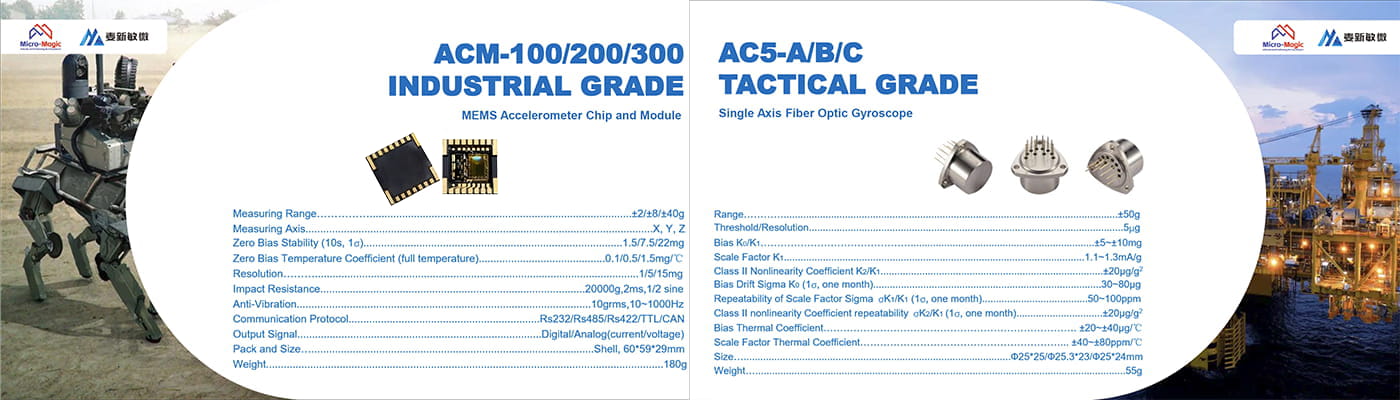
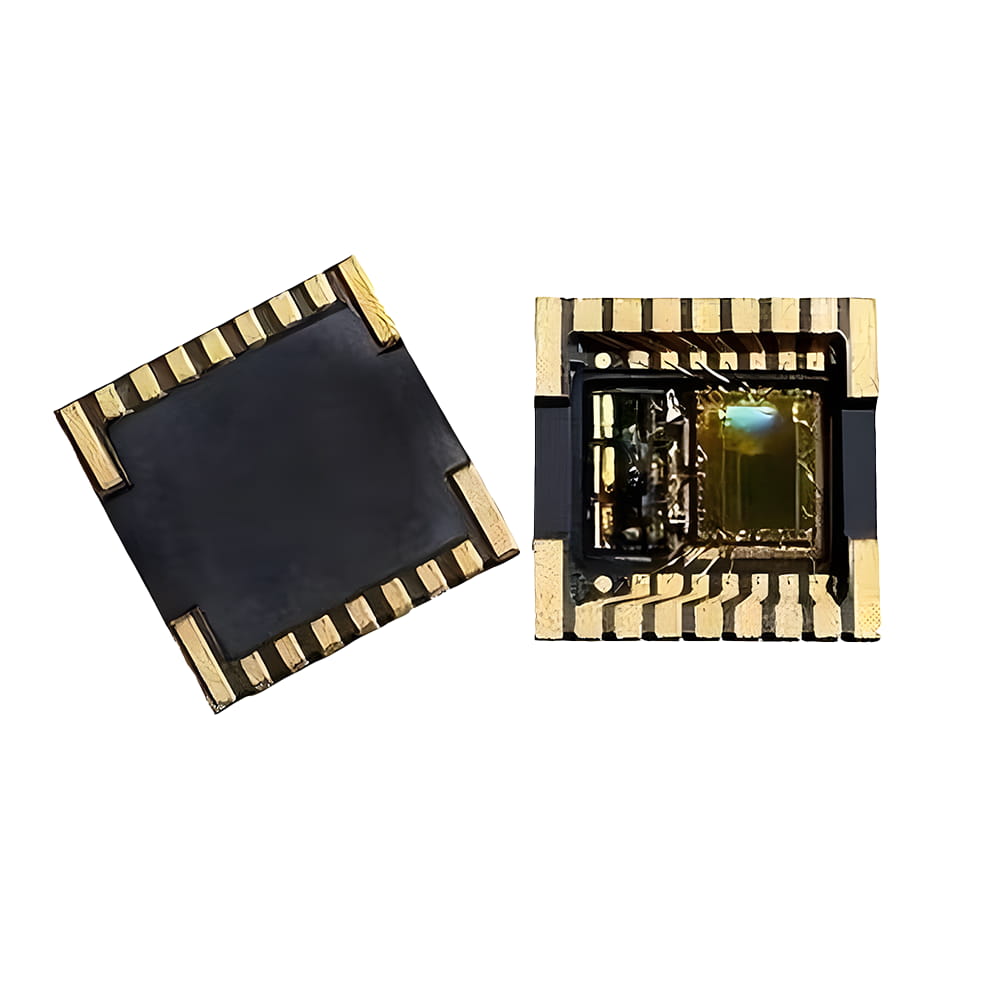
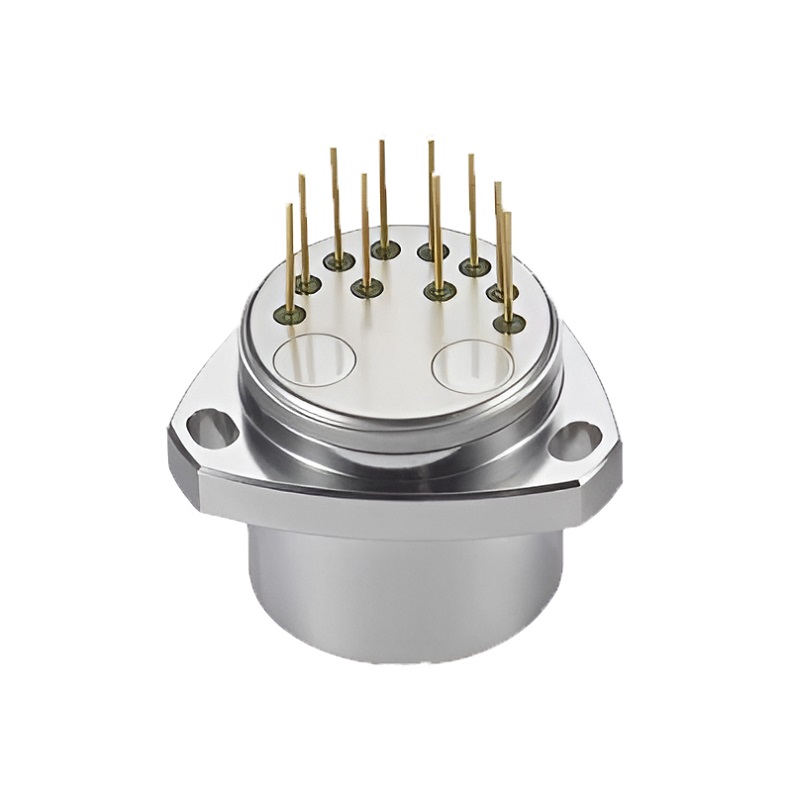
Micro-Magic Inc provides a series of high-precision quartz accelerometers and a series of MEMS accelerometers. Taking quartz accelerometer AC-5B and MEMS accelerometer ACM-300-8 as examples, some typical parameter comparisons are as follows:
|
Parameters |
AC-5 |
ACM-300 |
|
Measuring range |
±50 g |
±8 g |
|
Resolution |
<5μg |
<5 mg |
|
Bias |
<7 mg |
<50 mg |
|
Bias thermal coefficient |
< ±30μg/℃ |
0.5 mg/℃ |
|
Scale factor thermal coefficient |
<50 ppm/℃ |
100 ppm/℃ |
|
Bandwidth |
>300Hz |
0~400 Hz |
5. Conclusion
Choose Quartz Flexible Accelerometer for high-precision, high-stability applications where size, weight, and cost are less critical. Choose MEMS Accelerometer for compact, cost-effective, low-power applications where high precision is not the primary concern.
- MG-502 High Precision MEMS Gyroscope: Precision Navigation in Harsh Drilling Environments
- U6488 high-precision MEMS IMU: the core of stable control for drones and intelligent platforms
- Why the MG-502 MEMS Gyroscope is the “Hidden Eye” of Drone Attitude Control
- Applications of Fiber Optic Gyroscope: Enhancing Navigation and Orientation Precision
- The New Era of High-Precision Positioning: Deep Integration of RTK Technology and the I3700 Dual-Antenna GNSS/INS System
- Understanding Fiber Optic Gyroscope: How It Works
- The influence of low-pressure environment on quartz flexible accelerometers: A key consideration in aerospace applications
- Technical Analysis of Inclinometer Tilt: Accurate Measurement, Stable and Reliable