
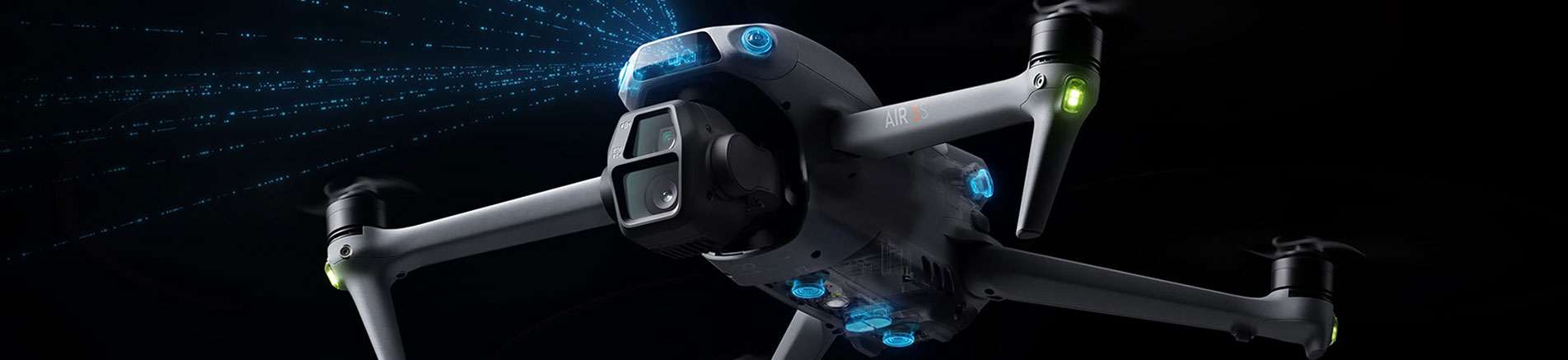
Application and development of inertial heading reference system (AHRS) in modern navigation


Author
21221
In the quest for the ultimate relaxation experience, our sofas are designed with your well-being in mind. Every curve and cushion is engineered to support and embrace your body's contours, creating a sense of comfort that feels tailor-made. We delve deep into the science of seating to ensure that with every moment you spend on our sofas, you feel the world melt away. Build all at once or add on over time. If you change your space, you can always change the shape.
Marie R. Winters


Key Points
Product: Attitude and Heading Reference System (AHRS)
Features:
• Provides real-time attitude information (pitch, roll, yaw)
• Uses gyroscopes, accelerometers, and magnetometers for sensor fusion
• High precision and low latency for dynamic environments
• Uses algorithms like Kalman filter and complementary filter for data fusion
• Compact and lightweight, ideal for aerospace, marine, and autonomous applications
Applications:
• Aerospace: Monitors flight status and stability in aircraft and UAVs
• Autonomous Vehicles: Ensures stable navigation in self-driving cars
• Marine: Tracks attitude for underwater vehicles and submarines
• AR/VR: Captures user head movements for immersive experiences
Advantages:
• High precision and reliability in real-time navigation
• Reduces dependency on manual monitoring and traditional methods
• Easily integrates with other navigation systems like GPS
• Works in various environmental conditions (extreme temperatures, vibrations, etc.)
• Low power consumption and efficient for extended use in dynamic settings
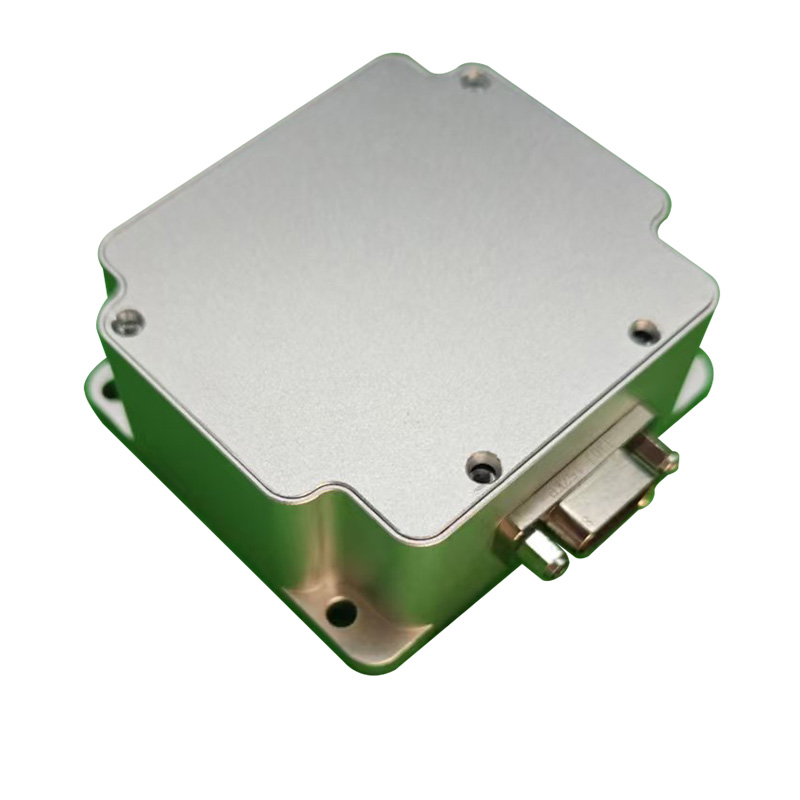
The Attitude and Heading Reference System (AHRS) is a device widely used in aerospace, unmanned vehicles, marine exploration, and other precision navigation fields. Its primary function is to provide real-time attitude information (such as pitch, roll, and yaw) by measuring the acceleration and angular velocity of the aircraft or spacecraft, enabling precise navigation and control.
1. Working Principle of AHRS
The core components of AHRS typically include gyroscopes, accelerometers, and magnetometers. These sensors provide real-time data to sense the motion state of the vehicle. The gyroscope provides angular velocity information, the accelerometer measures acceleration, and the magnetometer helps calibrate the heading angle.
In practical applications, AHRS needs to use sensor fusion algorithms to combine data from different sensors and provide accurate attitude estimation. Common algorithms include Kalman Filtering and Complementary Filtering. These algorithms help correct sensor errors and provide reliable heading and attitude information.
2. Attitude Estimation and Mathematical Model
One of the core tasks of AHRS is attitude estimation. Attitude refers to the orientation of an object relative to the Earth's reference coordinate system, usually represented by three angles: pitch, roll, and yaw. There is a close mathematical relationship between these angles and the output signals from inertial sensors.
Let the accelerometer and angular velocity sensor outputs be represented by  , and
, and  ,respectively. The estimation of attitude angles can be computed using the following formulas:
(1)Relationship between Angular Velocity and Attitude Angles
The change in attitude angles can be calculated from the angular velocity. The relationship between angular velocity  and the rate of change of attitude angles
  is given by
where  represents the yaw (heading angle), pitch angle, and roll angle, and
  is the Jacobian matrix describing the mapping from angular velocity to attitude angles.
(2)Relationship between Acceleration and Attitude Angles
For the acceleration data from the accelerometer 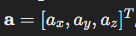 ,the following equation combines the acceleration data with attitude angles:
 ,where
 is the rotation matrix that describes the rotation between the body frame and the world frame. This matrix allows the conversion of acceleration data from the world coordinate system to the body coordinate system.
(3)Complementary Filter and Kalman Filter
In practice, AHRS systems use complementary filters or Kalman filters to fuse data from different sensors. The basic idea of complementary filtering is to leverage the low-frequency data from the accelerometer and the high-frequency data from the gyroscope to smooth the attitude estimation process and reduce noise.
The formula for the complementary filter is:
1.Where  is the current estimated attitude,
 is the angular velocity from the gyroscope,
 is the attitude estimated from the accelerometer,
 is the fusion coefficient, and
  is the time interval.
The Kalman filter, on the other hand, uses prediction and update steps to optimize attitude estimation, providing more accurate results in dynamic environments.
3. Applications of AHRS
With the continuous development of technology, the application fields of AHRS have expanded. Below are several typical applications:
- Aerospace: In aircraft, spacecraft, and unmanned aerial vehicles (UAVs), AHRS is one of the fundamental attitude navigation systems, used to monitor flight status in real-time and ensure the stability of the vehicle.
- Autonomous Vehicles: In autonomous cars, AHRS provides real-time attitude information to help the vehicle maintain stable motion, especially in complex environments where positioning and control are crucial.
- Marine Exploration: Submarines and underwater robots rely on AHRS to obtain attitude data for underwater navigation, ensuring proper heading and positioning.
- Augmented Reality and Virtual Reality: In AR/VR devices, AHRS is used to capture head movements of the user, enabling immersive experiences.
4. Future Development Trends
With advancements in microelectronics, sensor technologies, and data processing capabilities, the performance and application prospects of AHRS systems continue to improve. In the future, AHRS is expected to make significant progress in the following areas:
- High-Precision Sensors: The next generation of high-precision, low-power sensors will further enhance the performance of AHRS, especially in harsh environments.
- Intelligent Algorithms: With the development of artificial intelligence, AHRS will implement more intelligent data fusion and attitude estimation algorithms, offering more precise navigation support.
- Multi-Sensor Fusion: In the future, AHRS will increasingly integrate with GPS, vision sensors, and other navigation technologies, forming a more comprehensive and reliable navigation system.
5. Conclusion
As a crucial component of navigation and positioning technologies, AHRS plays an increasingly important role in various fields. With the continuous advancement of technology, AHRS will provide stronger support for precise navigation, driving the development of automation and intelligence. By gaining a deeper understanding of AHRS’s working principles and its application prospects, we can better grasp the opportunities and challenges brought by this technology.
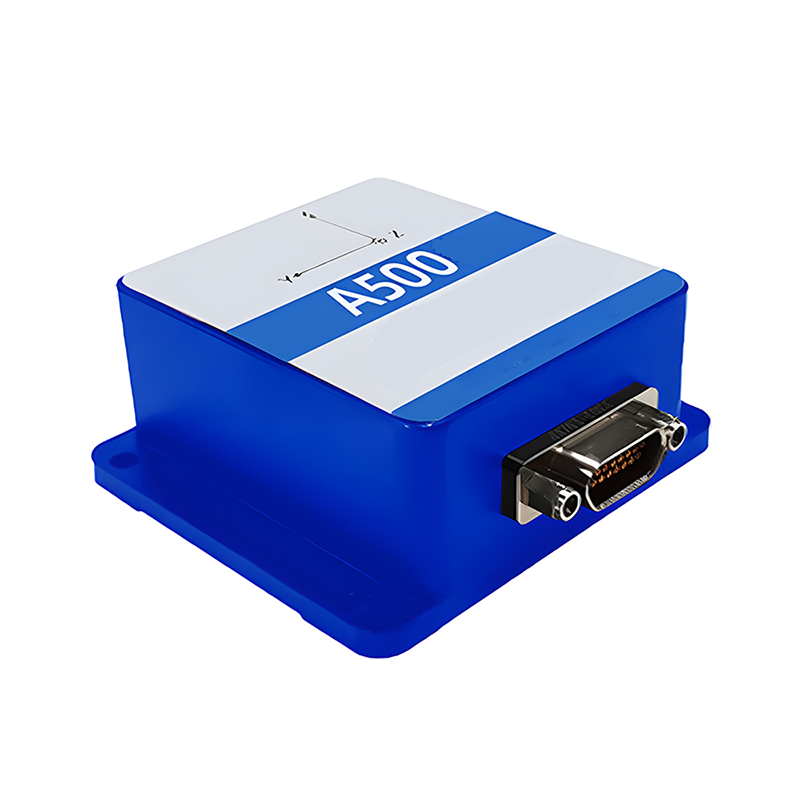
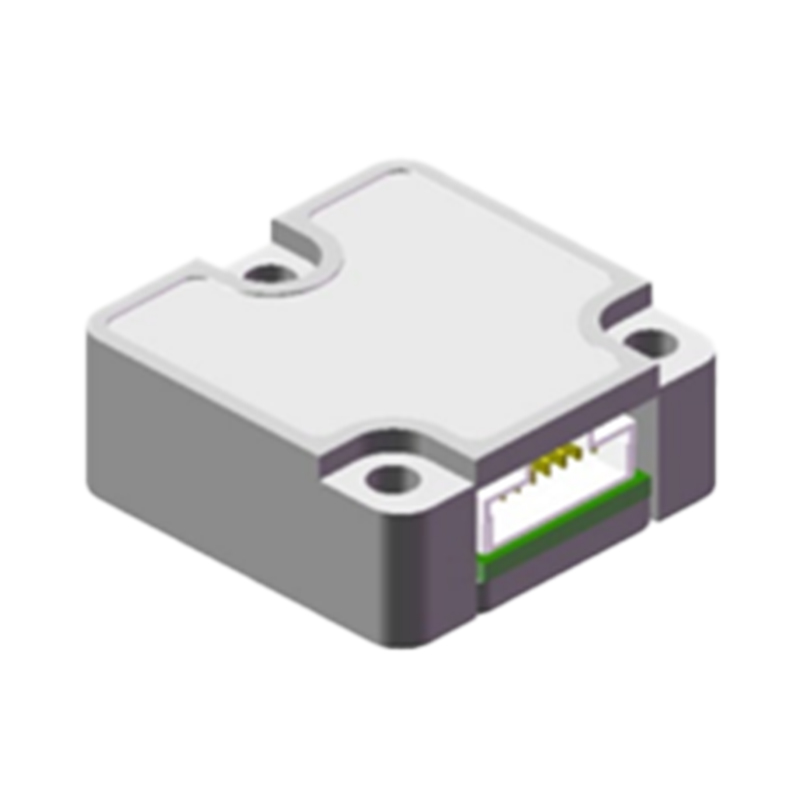
- MG-502 High Precision MEMS Gyroscope: Precision Navigation in Harsh Drilling Environments
- U6488 high-precision MEMS IMU: the core of stable control for drones and intelligent platforms
- Why the MG-502 MEMS Gyroscope is the “Hidden Eye” of Drone Attitude Control
- Applications of Fiber Optic Gyroscope: Enhancing Navigation and Orientation Precision
- The New Era of High-Precision Positioning: Deep Integration of RTK Technology and the I3700 Dual-Antenna GNSS/INS System
- Understanding Fiber Optic Gyroscope: How It Works
- The influence of low-pressure environment on quartz flexible accelerometers: A key consideration in aerospace applications
- Technical Analysis of Inclinometer Tilt: Accurate Measurement, Stable and Reliable