
Demystifying Tactical-Grade Fiber Optic Gyroscopes Principles, Applications, and Market Prospects


Author
21221
In the quest for the ultimate relaxation experience, our sofas are designed with your well-being in mind. Every curve and cushion is engineered to support and embrace your body's contours, creating a sense of comfort that feels tailor-made. We delve deep into the science of seating to ensure that with every moment you spend on our sofas, you feel the world melt away. Build all at once or add on over time. If you change your space, you can always change the shape.
Marie R. Winters


Explore the working principles, military/civilian applications, and market prospects of tactical-grade fiber optic gyroscopes (FOGs). Learn about top products like GF-3G70 and GF-3G90, and discover their role in aerospace, UAVs, and more.
1. Introduction
In the field of modern inertial navigation, Fiber Optic Gyroscopes (FOGs) have become one of the mainstream devices due to their unique advantages. Today, we will delve into the working principles, current market status, and typical product applications of this technology, with a special focus on the performance characteristics of tactical-grade fiber optic gyroscopes.
2. Working Principles of Fiber Optic Gyroscopes
A fiber optic gyroscope is an all-solid-state fiber optic sensor based on the Sagnac effect. Its core component is a fiber optic coil, where light emitted by a laser diode propagates in two directions along the coil. When the system rotates, the propagation paths of the two light beams produce a difference. By measuring this optical path difference, the angular displacement of the sensitive component can be precisely determined.
Simply put, imagine emitting two beams of light in opposite directions on a circular track. When the track is stationary, the two beams will return to the starting point simultaneously. However, if the track rotates, the light moving against the rotation direction will "travel a longer distance" than the other beam. The fiber optic gyroscope calculates the rotation angle by measuring this minute difference.
3. Technical Classification and Market Status
Based on their working methods, fiber optic gyroscopes can be divided into:
Interferometric Fiber Optic Gyroscope (I-FOG)
Resonant Fiber Optic Gyroscope (R-FOG)
Brillouin Scattering Fiber Optic Gyroscope (B-FOG)
In terms of accuracy levels, they include:
Low-end tactical grade
High-end tactical grade
Navigation grade
Precision grade
Currently, the fiber optic gyroscope market exhibits dual-use characteristics for military and civilian applications:
Military applications: Attitude control for fighter jets/missiles, tank navigation, submarine heading measurement, etc.
Civilian applications: Car/aircraft navigation, bridge measurement, oil drilling, etc.
It is worth noting that medium-to-high precision fiber optic gyroscopes are primarily used in high-end military equipment such as aerospace, while low-cost, low-precision products are widely applied in civilian fields like oil exploration, agricultural aircraft attitude control, and robotics.
4. Technical Challenges and Development Trends
The key to achieving high-precision fiber optic gyroscopes lies in:
1. Studying the impact of optical devices and physical environments on performance.
2. Suppressing relative intensity noise.
With the advancement of optoelectronic integration technology and specialty optical fibers, fiber optic gyroscopes are rapidly developing toward miniaturization and cost reduction. Integrated, high-precision, and miniaturized fiber optic gyroscopes will become the mainstream in the future.
5. Recommended Tactical-Grade Fiber Optic Gyroscope Products
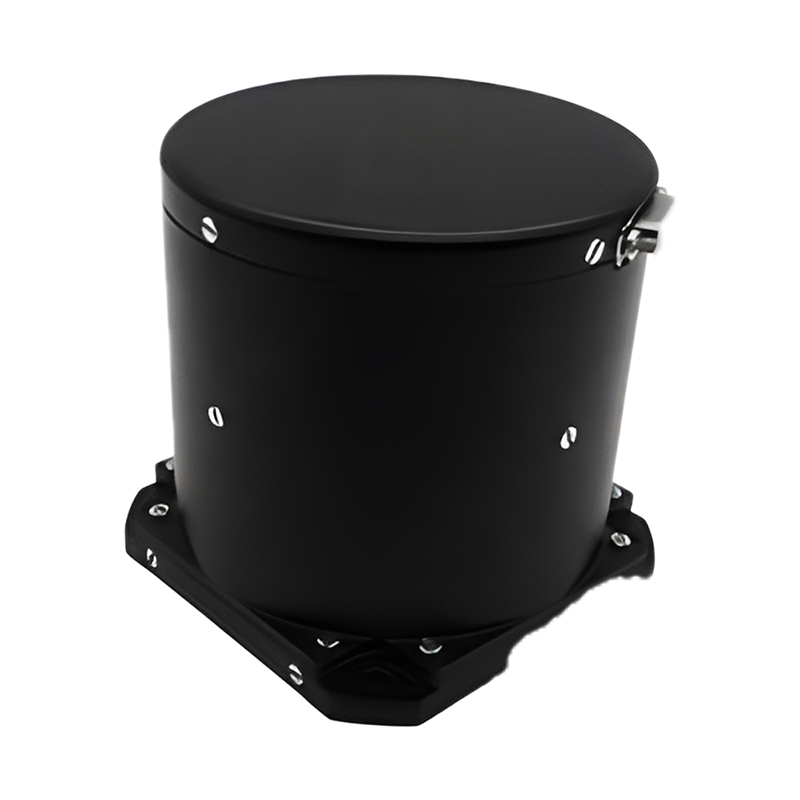
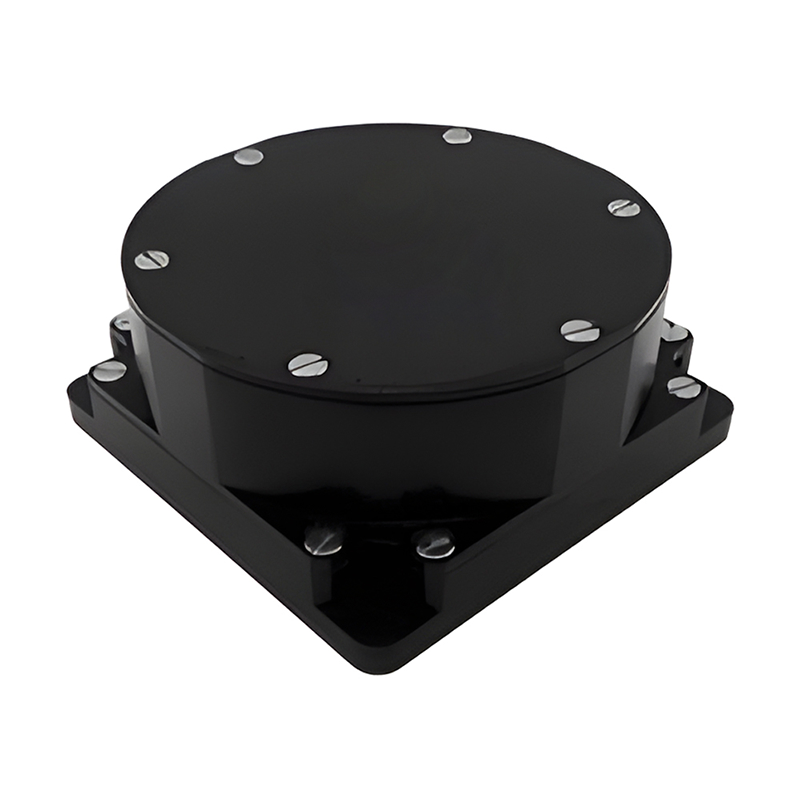
Taking Micro-Magic Company's products as an example, their tactical-grade fiber optic gyroscopes are characterized by medium precision, low cost, and long lifespan, offering significant price advantages in the market. Below are two popular products:
GF-3G70
Performance Characteristics:
Bias stability: 0.02~0.05°/h
Typical Applications:
Electro-optical pods/flight control platforms
Inertial Navigation Systems (INS)/Inertial Measurement Units (IMU)
Platform stabilization devices
Positioning systems
North seekers
GF-3G90
Performance Characteristics:
Higher bias stability: 0.006~0.015°/h
Long lifespan, high reliability
Typical Applications:
UAV flight control
Mapping and orbital inertial measurement
Electro-optical pods
Platform stabilizers
6. Conclusion
Fiber optic gyroscope technology holds significant strategic importance for a country's industrial, defense, and technological development. With technological advancements and the expansion of application scenarios, fiber optic gyroscopes will play a critical role in more fields. Tactical-grade products, with their excellent cost-performance ratio, are gaining widespread application in both military and civilian markets.
- MG-502 High Precision MEMS Gyroscope: Precision Navigation in Harsh Drilling Environments
- U6488 high-precision MEMS IMU: the core of stable control for drones and intelligent platforms
- Why the MG-502 MEMS Gyroscope is the “Hidden Eye” of Drone Attitude Control
- Applications of Fiber Optic Gyroscope: Enhancing Navigation and Orientation Precision
- The New Era of High-Precision Positioning: Deep Integration of RTK Technology and the I3700 Dual-Antenna GNSS/INS System
- Understanding Fiber Optic Gyroscope: How It Works
- The influence of low-pressure environment on quartz flexible accelerometers: A key consideration in aerospace applications
- Technical Analysis of Inclinometer Tilt: Accurate Measurement, Stable and Reliable