

In order to prevent the power supply user from accidentally connecting the input power line incorrectly and causing the power supply to burn out, an anti-reverse connection circuit is generally required at the power supply input end. At the same time, in order to ensure that the input voltage is within a safe range, the input voltage also needs to be protected against overvoltage cutoff. The circuit shown in Figure 1 realizes the integrated function of anti-reverse connection and overvoltage protection. Its overvoltage protection function is analyzed as follows: When Vin is in the normal input voltage range, the voltage regulator Z1 does not reversely break down, the current of R2 and R3 is basically 0, the Vbe of the transistor P1 is 0, that is, the PNP transistor is not turned on, and the Vgs of the PMOS tube Q1 is determined by the voltage divider of resistors R4 and R5. Vgs is greater than the conduction threshold, and the PMOS tube is turned on, that is, the power supply works normally; when the Vin input is greater than the normal input voltage, at this time Vin>Vbr, the voltage regulator is broken down, the PNP transistor Q1 is turned on, VCE≈0, that is, the Vgs of the PMOS tube is ≈0, and the PMOS tube is turned off, that is, overvoltage protection is achieved. Its reverse connection protection function is analyzed as follows: the input reverse connection protection is realized by NMOS tube Q2. When the positive pole of the power supply is input from Vin, the gate voltage Vgs of NMOS tube Q2 is high. At this time, Q2 is turned on, Q1, load RL and Q2 form a loop, and the circuit works normally; when the positive pole of the power supply is reversed from the negative terminal below, Q2 is cut off, the entire loop is disconnected and the circuit does not work, thereby playing a role in reverse connection protection.
Read More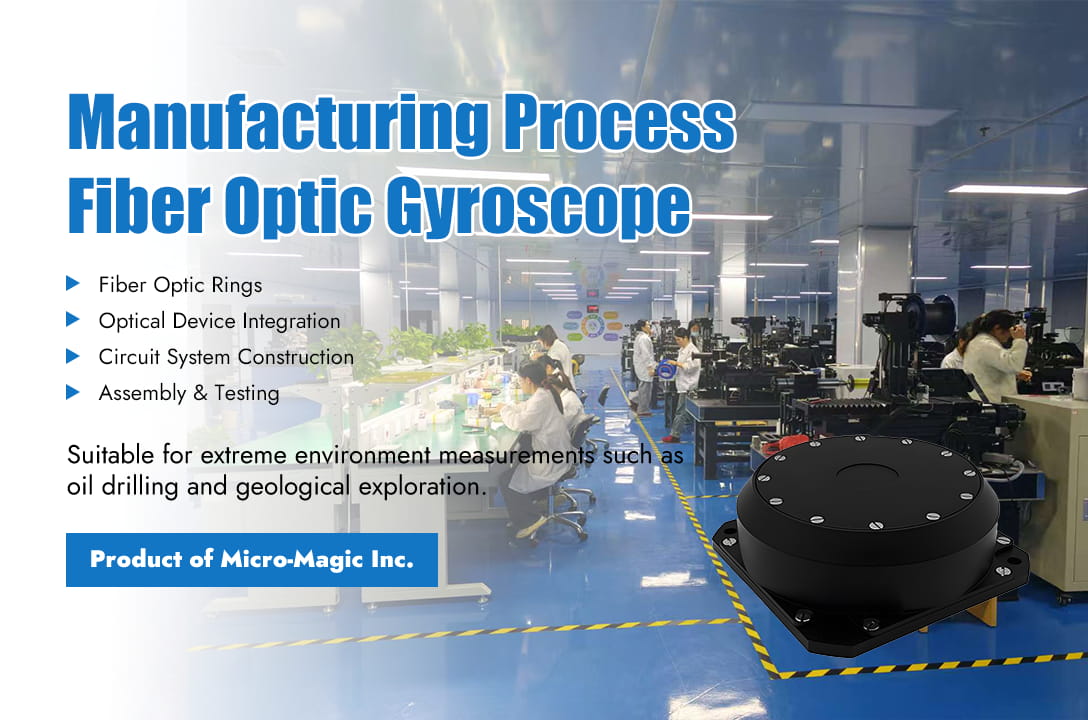
Fiber optic gyroscope has become the preferred core component for high-precision and high reliability inertial navigation systems due to its significant advantages such as all solid state design, no moving parts, fast start-up, long lifespan, wide dynamic range, and strong resistance to impact and vibration. However, behind the outstanding performance of fiber optic gyroscopes is their extremely precise and complex manufacturing process. From the selection and processing of specialized optical fibers, the coupling and alignment of precision optical components, to the precision winding and curing of the core sensing coil, and further to the integration of complex electronic systems and the implementation of sophisticated environmental compensation algorithms – each production stage embodies the crystallization of cutting-edge materials science, precision optical engineering, microelectronics technology, and advanced control theory. Even the slightest deviation during the manufacturing process can have a decisive impact on the accuracy, stability, and reliability of the final product. Below is a detailed introduction to the production process of fiber optic gyroscope. 1. Manufacturing of fiber optic rings The core component of a fiber optic gyroscope is the fiber ring, and its manufacturing process is crucial. Firstly, high-quality optical fibers need to be selected and wound into a ring shape through precise winding processes. During this process, it is necessary to strictly control the tension of the optical fibers, the diameter and density of the winding ring to ensure the performance and stability of the fiber ring. After winding, adhesive coating and curing are performed for shape fixation. Subsequently, the fiber optic ring needs to undergo temperature cycling aging to eliminate internal residual stress and enhance mechanical stability through epoxy coating. 2. Optical Device Integration After the fiber optic ring is manufactured, it needs to be precisely assembled with other optical components. Mainly includes the assembly of Y-waveguide modulators and the integration of light sources and detectors to ensure smooth and stable optical paths. In addition, strict performance testing of the assembled components is required to ensure that they meet the design requirements. 3. Circuit system construction The construction of circuit systems includes the design of signal processing circuits and closed-loop feedback circuits. FPGA serves as the core processor to generate square wave/sawtooth wave modulation signals to drive the Y waveguide, bias the operating point to the sensitive area, and calculate the phase difference (Δφ) of the interference signal output by the detector, which is converted into angular velocity (Ω). Dynamically compensate for Sagnac phase difference through digital closed-loop control to improve linearity and dynamic range. 4. Whole machine assembly and testing After completing the manufacturing of fiber optic rings, optical components, and circuit boards, the next step is to proceed with overall assembly. This process includes environmental adaptability encapsulation and performance calibration and compensation. The optical and electronic units are sealed inside a metal shielding shell to isolate temperature and humidity changes and electromagnetic interference. Military grade products use titanium alloy shells to enhance impact resistance. Subsequently, a series of tests and calibrations were conducted on the fiber optic gyroscope, including zero bias calibration, temperature compensation, and threshold testing, to ensure that all performance indicators meet the expected requirements. The key process difficulties in the manufacturing process of fiber optic gyroscopes mainly include the following: 1. Precision winding of fiber optic coils The stress generated during the winding process of fiber optic coils can cause polarization errors. The solution is to use polarization maintaining fibers and adopt a symmetrical winding process. 2. Packaging and Interconnection of Integrated Optical Chips (Y-Waveguides) Y-Waveguides are the core multifunctional integrated optical devices of FOGs. During the packaging and interconnection process, the alignment accuracy of the optical axis is extremely high. the solution to this difficulty is to use an active alignment system and a polarization maintaining fusion splicer. 3. Temperature drift Temperature changes can cause gyroscope phase drift, affecting measurement accuracy. The solution is to use multi-stage depolarizers and adopt segmented temperature compensation algorithms to eliminate the impact of temperature drift.
Read More
Quartz flexible accelerometers are widely used in aerospace, inertial navigation, precision measurement and other fields due to their advantages of high precision and stability. However, its core sensitive component - quartz flexible pendulum - is very fragile and extremely sensitive to vibration environments. Vibration may cause performance degradation, zero shift, and even structural damage. Therefore, strict vibration testing and effective anti vibration measures are crucial. Purpose of Vibration Testing The purpose of vibration testing is to evaluate the performance, structural integrity, and reliability of accelerometers in actual or expected vibration environments. The main types of testing include sine vibration testing and random vibration testing. Sine vibration testing is to find the resonant frequency of the structure and evaluate its response and tolerance at specific frequencies. Typically, within the specified frequency range (e.g., 5 Hz – 2000 Hz or higher, according to the specification), a linear or logarithmic sweep is performed along three mutually perpendicular axes. Frequencies exhibiting an abnormal increase in accelerometer output (response amplification) are recorded. Special attention should be paid to the first-order and second-order flexural resonant frequencies of the quartz flexure, as these frequencies are most prone to damage. The relationship between the input vibration and output signal is analyzed. Perform fixed frequency vibration for a specified duration (such as several minutes) on the identified resonant frequency points (especially the pendulum resonance points) to test their fatigue life and stability. Random vibration testing is to simulate wideband, random vibration excitations in actual environments (such as rocket launches, engine noise, aerodynamic turbulence, vehicle driving), and evaluate their comprehensive performance under statistically distributed vibrations. Apply vibrations with specific power spectral density patterns along three mutually perpendicular axes within the specified frequency range. The scale of testing is usually higher than that of sine testing, which can better reflect the real environment. PSD spectra and Grms values are developed based on specifications or measured data. The key monitoring parameters in the test include output signals, physical status, and performance verification. The output signal mainly observes zero offset, scale factor changes, increased noise levels, abnormal outputs (saturation, oscillation), etc; The physical state mainly involves checking whether the accelerometer has any abnormal noise, whether the structure is loose, and whether there is any damage to the appearance (after testing, the cover needs to be opened to check the swing plate); Performance validation mainly involves comprehensive static performance testing of accelerometers before, during, and after vibration (zero bias, scale factor, second-order nonlinearity, threshold, resolution, repeatability, etc.), comparing the effects of vibration. Vibration Mitigation Measures To address the vulnerability of quartz flexure accelerometers, vibration resistance measures must be implemented at multiple levels. (1) Core sensitive structure design and process Firstly, it is necessary to optimize the design of the oscillating plate. While meeting the requirements of sensitivity and bandwidth, the thickness of the oscillating plate should be appropriately increased (balancing sensitivity), the shape and support structure should be optimized, and the lowest order resonant frequency should be maximized to be higher than the expected main vibration environment frequency (ideally higher than twice). Avoid resonance frequencies falling in the main vibration energy concentration zone. Secondly, it is precision manufacturing and assembly, strictly controlling the machining accuracy and symmetry of key components such as swing plates, torque converter coils, differential capacitor plates, etc., to ensure uniform stress distribution and reduce internal stress concentration points. Reliable processes such as laser welding are used to connect the swing plates to the base. Finally, the selection of materials should be based on high-strength and high stability quartz materials, and the stiffness and damping characteristics of the base and shell materials should also be considered. (2) Internal mechanical isolation and damping Firstly, apply a small amount of special damping adhesive (such as silicone rubber base) on the non sensitive area of the swing plate or the supporting beam. This is one of the most commonly used and effective measures, which can significantly reduce the resonance Q value and decrease the resonance amplification factor. However, extreme caution should be taken to avoid affecting sensor performance (such as introducing thermal stress, affecting symmetry, and increasing mass). Secondly, a micro isolation system (such as low stiffness, high damping rubber pads, metal rubber, micro wire rope isolators, etc.) should be designed between the core of accelerometer (including the core components of the swing plate assembly) and the housing base to isolate the transmission of high-frequency vibrations to the sensitive core. The stiffness, damping, and load-bearing capacity need to be carefully designed. (3) Sealing and Filling Encapsulating silicon gel or silicone rubber with low modulus and high damping in the inner cavity of the accelerometer (usually between the core and the shell) is another very effective anti vibration measure (especially anti shock and high-frequency vibration). Silicon gel or silicone rubber provides damping and absorbs vibration energy; Support internal structure and suppress relative motion; Protect internal components from contamination and moisture. The sealing adhesive needs to have extremely low shrinkage stress, excellent thermal stability, good adhesion, low air release, and low permeability (especially for space applications). The sealing process (excluding bubbles and curing) is crucial, as poor sealing can actually introduce stress or contamination. (4) External installation and system level vibration isolation Optimize the installation interface to ensure that the installation base is flat and rigid. Tighten the connecting bolts evenly to the specified torque to avoid introducing local stress or reducing overall stiffness due to improper installation. At the same time, install appropriate external shock absorbers between the accelerometer and vibration sources such as engine mounts and aircraft structures. Select the type of isolator (such as metal rubber isolator, wire rope isolator, viscoelastic damping isolator) based on the characteristics of the main vibration frequency, and its natural frequency should be much lower (usually <1/√ 2 times) than the lowest main vibration frequency that needs to be isolated. The load-bearing capacity of the isolator, environmental adaptability (temperature, vacuum), and the impact on the low-frequency performance of the sensor also need to be considered. Test cases Taking the AC-9 series high-precision quartz accelerometer produced by Micro-Magic Inc as an example, the influence of vibration environment on the K0 index of the accelerometer is tested. Before vibration, the quartz accelerometer is in a 0g state, the product is powered on, data is collected for 1 minute, and take the average of the data, denoted as ; Start the vibration table under the following vibration conditions: 6g, random vibration at 200~2000Hz, wait for the vibration table to stabilize, collect data for 1 minute, and take the average of the data, denoted as ; Rotating vibration fixture, quartz accelerometer in 0g state, then power on the product, collect data for 1 minute, and take the average of the data, denoted as . By calculation, it can be concluded that: Conclusion The vibration problem of quartz flexible accelerometers is a system engineering issue that needs to be addressed throughout the entire process of design, manufacturing, testing, and application. When selecting and designing anti vibration measures, careful trade-offs must be made to ensure that the core performance indicators of the accelerometer are not significantly sacrificed while improving the anti vibration capability, and other environmental adaptability requirements are met. AC-9
Read More
In order to prevent the power supply user from accidentally connecting the input power line incorrectly and causing the power supply to burn out, an anti-reverse connection circuit is generally required at the power supply input end. At the same time, in order to ensure that the input voltage is within a safe range, the input voltage also needs to be protected against overvoltage cutoff. The circuit shown in Figure 1 realizes the integrated function of anti-reverse connection and overvoltage protection. Its overvoltage protection function is analyzed as follows: When Vin is in the normal input voltage range, the voltage regulator Z1 does not reversely break down, the current of R2 and R3 is basically 0, the Vbe of the transistor P1 is 0, that is, the PNP transistor is not turned on, and the Vgs of the PMOS tube Q1 is determined by the voltage divider of resistors R4 and R5. Vgs is greater than the conduction threshold, and the PMOS tube is turned on, that is, the power supply works normally; when the Vin input is greater than the normal input voltage, at this time Vin>Vbr, the voltage regulator is broken down, the PNP transistor Q1 is turned on, VCE≈0, that is, the Vgs of the PMOS tube is ≈0, and the PMOS tube is turned off, that is, overvoltage protection is achieved. Its reverse connection protection function is analyzed as follows: the input reverse connection protection is realized by NMOS tube Q2. When the positive pole of the power supply is input from Vin, the gate voltage Vgs of NMOS tube Q2 is high. At this time, Q2 is turned on, Q1, load RL and Q2 form a loop, and the circuit works normally; when the positive pole of the power supply is reversed from the negative terminal below, Q2 is cut off, the entire loop is disconnected and the circuit does not work, thereby playing a role in reverse connection protection.
Read More
In the field of precision measurement and control, high-precision current/frequency conversion technology is crucial. The AVI-F series I/F conversion module launched by Micro-Magic Inc has become an ideal choice for high-performance inertial navigation system accelerometer data acquisition, weak current signal digital acquisition and other high demand scenarios due to its excellent performance and stable performance. AVI-F is composed of voltage reference, constant current source, integrator, integrator arm, logic control CPLD, etc. The current signal of the accelerometer can be directly converted into pulse frequency, which is an analog/digital converter with high accuracy and good resolution. AVI-F adopts the principle of charge balance integration, which has the characteristics of signal acquisition without loss, and is less affected by noise such as power supply. It is an ideal circuit for building high-performance inertial navigation systems. What are the core advantages of AVI-F series products? 1. High precision and stability The AVI-F series module adopts a charge integration method, with a maximum output frequency of 256kHz, Zero offset as low as 10nA, and a comprehensive nonlinear error of only 20ppm, ensuring high accuracy and reliability of signal conversion. Its scale factor temperature coefficient is as low as 1ppm/℃, and it exhibits stability throughout the entire temperature range, suitable for harsh environments ranging from -45℃ to 70℃. 2. High standard hardware design High performance components are used, mostly surface-mount devices (SMD), with small size and high precision. The board level uses precision constant current sources and high-precision multimeters for precision calibration, including symmetry and linearity. 3. Multi-functional output interface The module supports three independent pulse outputs (X/Y/Z channels), each containing positive and negative current pulse signals. At the same time, an RS422 serial port function is added, which sends pulse accumulation at a frequency of 1KHz to simplify the data acquisition process and improve system integration efficiency. 4. Low power consumption and localized design The power requirements are ±15V and +5V, with a steady-state current as low as 0.2A and excellent power consumption performance. All components are 100% domestically produced to ensure supply chain security and meet independent and controllable needs. Typical Applications of AVI-F Series Product a. Inertial navigation system: Accurately convert accelerometer signals to improve navigation accuracy. b. Industrial automation: Real time monitoring of current signals and optimization of control processes. c. Research instruments: high-resolution data acquisition to assist in precision experiments. Why choose AVI-F module? The AVI-F series I/F conversion module integrates high precision, low power consumption and multifunctionality, making it a wise choice for users who pursue performance and reliability. Whether in harsh environments or complex applications, it can provide stable and efficient solutions. AVI-F Whatever you needs, Micro-Magic is at your side.
Read More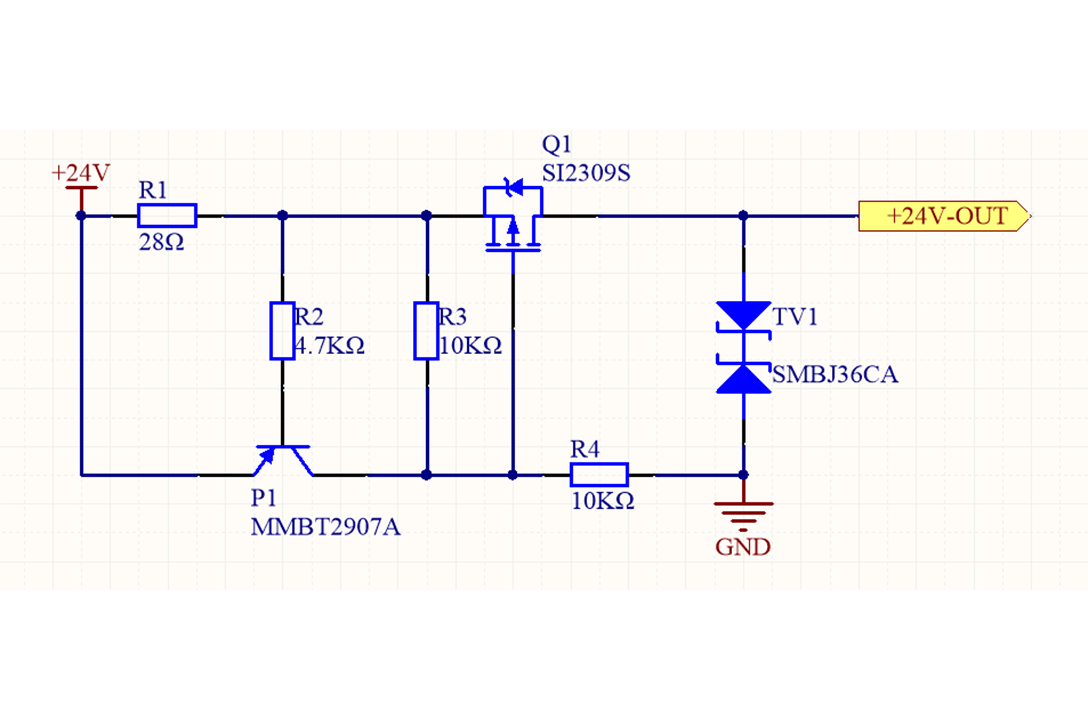
According to the topology of the two-wire circuit, the power current is modulated by the sensor and then returns to the signal acquisition circuit. If the power output part does not undergo any processing, once the sensor is short-circuited or the end user operates improperly causing a short circuit, the power is very likely to be damaged or cause damage to the signal acquisition circuit. To avoid this situation, a current-limiting circuit needs to be added to the circuit that provides 24V power to the sensor to limit the current within a safe range (for example, below 30mA), avoiding catastrophic failures. The following presents the current-limiting protection circuit for providing 24V power to the sensor when designing the 4-20mA interface acquisition circuit. When the current is less than the limiting current Imax, the voltage drop across resistor R1 is less than the Vbe conduction voltage of transistor P1. Resistors R3 and R4 divide the voltage, creating a sufficient voltage difference between the source and gate of the field-effect transistor Q1. At this point, transistor P1 is cut off and transistor Q1 conducts. The circuit is in a normal operating state. When the current increases to be greater than the limiting current Imax, the voltage drop across resistor R1 is greater than the Vbe conduction voltage of transistor P1. At this time, transistor P1 is in the conducting state. The input voltage is directly applied to the gate of the field-effect transistor Q1. At this point, the voltages at the source and gate of the field-effect transistor Q1 are approximately equal, causing the field-effect transistor Q1 to be cut off and disconnecting the circuit, putting the circuit in a protective state. This avoids excessive current damage to the load. Because the Vbe conduction voltage of MMBT2907A is approximately 0.7V, and from Vbe/R1 = 25mA, it can be known that the limiting current is approximately 25mA. If the limiting current needs to be adjusted, simply adjusting the resistance value of resistor R1 is sufficient.
Read More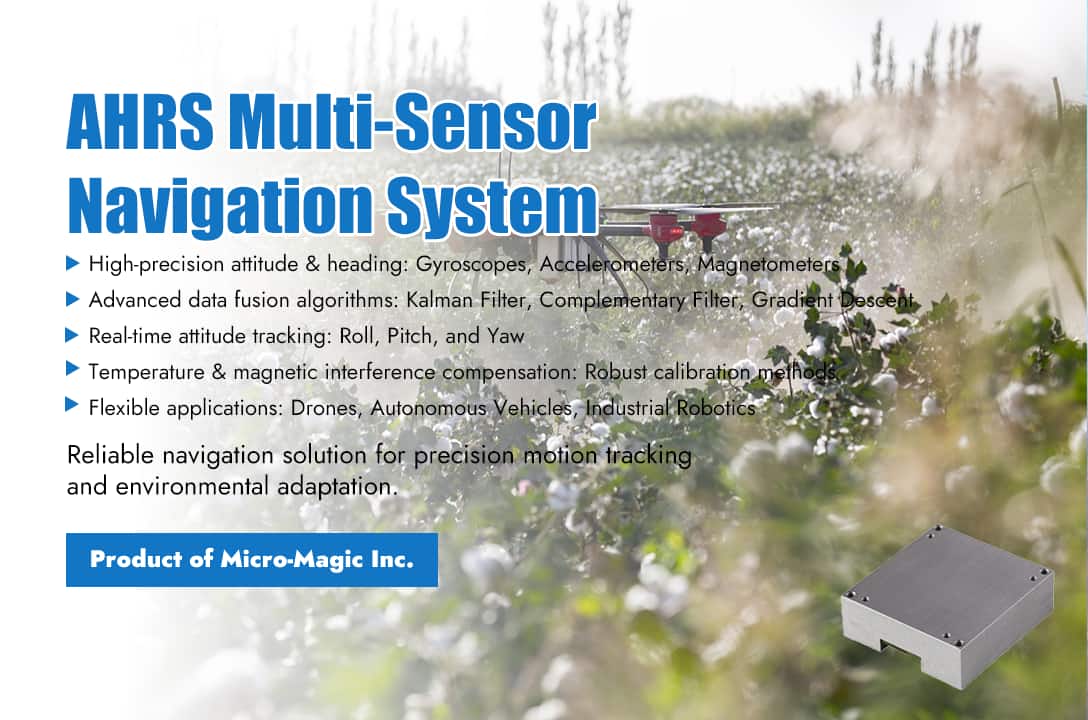
Quickly get the product information in one minute Attitude and Heading Reference System (AHRS) is a key navigation device that uses multi-sensor data fusion to real-time calculate the three-dimensional attitude (pitch angle, roll angle) and heading angle of a carrier. Its core technologies involve fields such as microelectromechanical systems (MEMS), inertial navigation, signal processing, and nonlinear optimization. This article will explore technical aspects from three dimensions: mathematical models, algorithm implementation, and error compensation. Principles and kinematic equations of AHRS The core principle of AHRS is multi-sensor data fusion, which compensates for the limitations of a single sensor through complementary sensors. 1. Sensor composition: a. Gyroscope: It measures angular velocity using the Coriolis effect and integrates it to obtain attitude changes, but there is zero bias drift (accumulated error over time). b. Accelerometer: measures specific force (gravitational acceleration+motion acceleration) and can be used for attitude calibration (roll, pitch) at static or constant speed. c. Magnetometer: measures the direction of the geomagnetic field, provides absolute heading (yaw angle), but is susceptible to hard/soft magnetic interference. d. Optional GPS: Assist in correcting position and velocity errors. 2. Kinematic equations Differential equation for carrier angular velocity and attitude update: Among them, represents quaternion multiplication and is the angular velocity measured by the gyroscope (in rad/s) The core architecture and algorithm of AHRS The core challenge of AHRS lies in how to integrate data from gyroscopes (with excellent dynamic response but drift), accelerometers (with high static accuracy but subject to motion interference), and magnetometers (providing absolute heading but susceptible to interference). The mainstream algorithms are as follows: 1. Kalman Filter Based on the state space model, the attitude is iteratively estimated through prediction (gyroscope integration) and update (accelerometer/magnetometer observation). The construction of the state vector is as follows, including attitude error angle and gyroscope bias . The residual of gravity vector measured by accelerometer and geomagnetic field measured by magnetometer are used as observation values, and the following observation equation is constructed: In covariance tuning, the noise covariance of the accelerometer is usually set to , and the noise covariance of the magnetometer is set to . 2. Complementary Filter Algorithm Weighted fusion of high-frequency gyroscope data and low-frequency accelerometer/magnetometer data. Its advantage is that it has a small computational load and is suitable for embedded systems; The disadvantage is that parameter tuning relies on experience and has limited dynamic performance. The high-frequency part uses gyroscope integration, and low frequency calibration using accelerometers/magnetometers: Time constant , usually takes 3. Gradient descent optimization algorithm There are two main gradient descent optimization algorithms. The Mahony algorithm is based on quaternion nonlinear complementary filtering and corrects gyroscope bias through a PI controller; The Madgwick algorithm optimizes quaternions directly by minimizing the error function between sensor measurements and predictions, resulting in high computational efficiency and suitability for low-power scenarios. Among them, is the convergence rate factor, with typical values ranging from 0.1 ~ 0.5 . Challenges and Countermeasures of AHRS Engineering Implementation 1. Sensor error and calibration The zero bias of the gyroscope needs to be estimated and compensated online (such as through static state initialization); Motion acceleration can disrupt the measurement of gravity direction, therefore, dynamic interference from accelerometers needs to be detected through high pass filtering or motion state detection; The influence of temperature changes on gyroscopes and accelerometers needs to be corrected by establishing a temperature compensation model; The interference of magnetometer requires hard/soft magnetic calibration (ellipse fitting or calibration field based algorithm). 2. Dynamic environmental adaptability High frequency vibration causes an increase in accelerometer noise, requiring mechanical isolation or digital filtering. When performing rapid maneuvers (such as drone rolling), the accelerometer fails and a pure gyroscope needs to work for a short period of time. 3. Real time performance and computing resources High dynamic scenarios require algorithms to complete iterations in milliseconds (such as drone control cycles <10ms). Embedded platforms such as STM32 require optimization of floating-point operations or adoption of fixed-point number processing. 4. Multi sensor synchronization and latency The collection of sensor data requires strict time synchronization, otherwise the fusion error will increase. The transmission delay of communication interfaces (such as SPI/I2C) needs to be compensated. 5. Initial alignment and robustness The system needs to converge quickly during startup (such as by initializing the accelerometer/magnetometer in a stationary state). The system design requires robust design against outliers (such as instantaneous interference from magnetometers). Future development direction a. Deep learning assisted fusion: using neural networks to model complex errors and nonlinear characteristics. b. Multi source fusion enhancement: Combining vision (VIO), GNSS, or barometer to improve reliability in complex environments. c. Progress in MEMS technology: Higher precision low-noise gyroscopes (such as MEMS optical gyroscopes) will reduce algorithm burden. d. Edge computing optimization: algorithm lightweight for embedded AI chips (such as ARM Cortex-M7). Conclusion The technological evolution of AHRS is essentially a deep interweaving of mathematics, physics, and engineering practice. From real-time solving of quaternion differential equations to noise suppression of MEMS sensors, every technical detail directly affects the final performance of the system. With the improvement of edge computing capability and the practicality of high-precision sensors, the next generation of AHRS will achieve nanometer level angular vibration perception and fully autonomous anti-interference capability, giving unmanned systems space cognitive accuracy beyond human beings. A5500 Whatever you needs, Micro-Magic is at your side. U6488 Whatever you needs, Micro-Magic is at your side. A5000 Whatever you needs, Micro-Magic is at your side.
Read More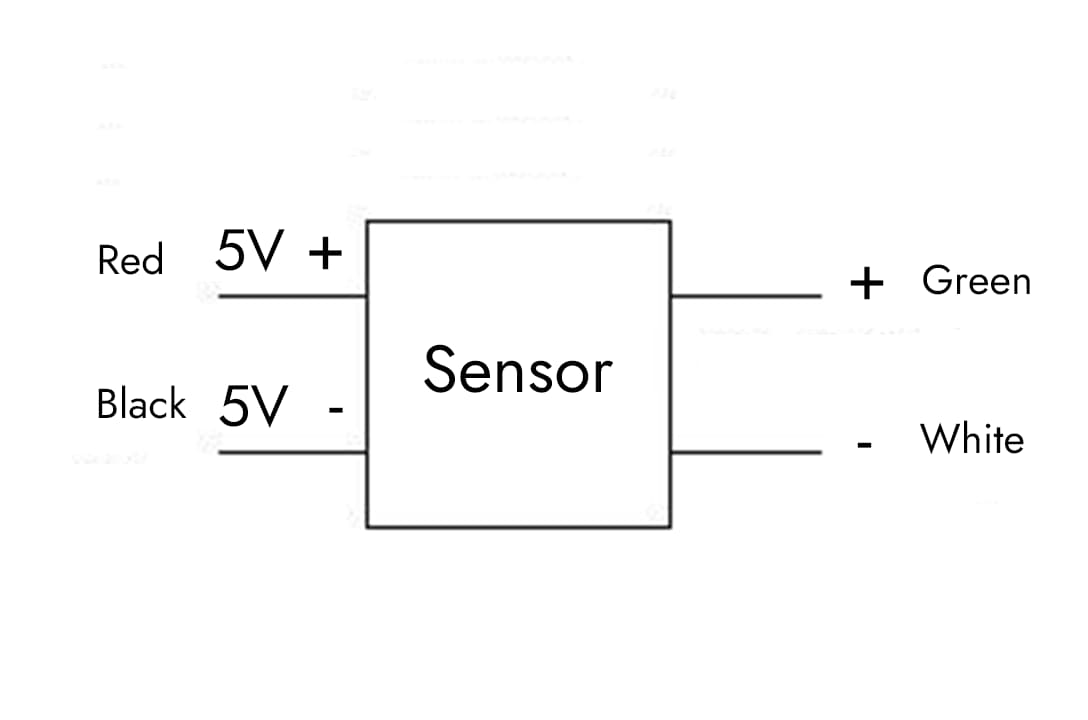
The main reason for choosing dual power supplies for sensors is to meet the requirements of signal integrity, circuit operating conditions, and measurement accuracy. This includes the following aspects: 1. Handling bidirectional signals (AC signals) Some sensors (such as vibration, sound, and acceleration sensors) output signals that are bidirectional, meaning they fluctuate above and below the zero reference point (positive and negative voltages). If only a single power supply is used, the negative half-cycle signal will be truncated, resulting in distortion. At this time, using positive and negative power supplies (such as ±5V, ±12V) to provide symmetrical voltages enables the signal to fluctuate centered at 0V, retaining the complete information of the positive and negative halves to avoid signal distortion. 2. Internal circuit operation requirements Many sensors integrate operational amplifiers or analog circuits for signal amplification or processing within their internal circuits. These devices require positive and negative power supplies to achieve: Simplified circuit design: In a single power supply system, when processing AC signals, a "virtual ground" needs to be set, which introduces additional noise and design complexity. While positive and negative power supplies naturally use "ground" (0V) as the reference point, without the need for additional bias circuits, this simplifies the design and reduces noise. Maximizing dynamic range: Many high-performance sensors and operational amplifiers require dual power supplies to fully utilize their input/output range, avoid non-linear distortion, and improve the linearity and dynamic range of the system. 3. Anti-interference and noise suppression The dual power supply design can reduce common-mode noise interference. Common-mode noise refers to the voltage difference between two signal lines to ground. Using positive and negative power supplies can effectively reduce this voltage difference, thereby reducing common-mode noise interference, especially in industrial environments, symmetrical power supply helps to improve the signal's signal-to-noise ratio.
Read More
Quickly get the product information in one minute In today's booming development of autonomous driving, drones, and robotics technology, high-precision and highly reliable navigation systems have become the core "brain" of intelligent devices. The MEMS inertial technology combined with dual antenna satellite navigation system I3700 launched by Micro-Magic Inc utilizes high-precision MEMS gyroscopes, accelerometers, and multi-mode multi frequency GNSS receivers to achieve fast and high-precision orientation and integrated navigation functions. It real-time calculates the position, heading, attitude, velocity, and other information of the carrier, resists obstruction and multipath interference, and achieves long-term, high-precision, and high reliability navigation in mountainous tunnels, urban canyon environments, automobiles, high-speed railways, and other areas. Support GNSS real-time RTK function, provide standardized user universal protocol, and have good scalability. Provide convenient navigation solutions for multi domain applications in all scenarios. At the same time, the I3700 has passed IP68 protection and CE certification, and can still work normally in harsh environments, meeting the requirements of industrial grade reliable design. Technical features and highlights of I3700 1. The structural layout of array MEMS-IMU improves the accuracy of attitude calculation To solve the problem of large errors in attitude calculation, an attitude calculation system based on array MEMS-IMU data fusion is proposed. The multi-information vector optimization method is used to fuse the data of the array MEMS-IMU, and the dynamic Kalman filtering method is used to calculate the attitude of the moving carrier. Improve attitude calculation capability to a higher level of accuracy in complex dynamic movements. 2. Support the reception and calculation of GNSS signals across the entire system and frequency band Built in dual antenna positioning and directional GNSS module, supporting all major satellite navigation systems worldwide, capable of high-precision and fast positioning and orientation. Simultaneously compatible with all frequency points, ensuring optimal positioning performance at any location worldwide. The built-in satellite receiver has strong anti-interference ability and can still provide accurate positioning in complex electromagnetic environments. 3. High performance integrated navigation Inertial + GNSS navigation technology combined with self-developed high-precision integrated navigation algorithm achieves a horizontal positioning accuracy of 0.8cm+1ppm and a heading accuracy of 0.2°. Even if GNSS signals are temporarily lost (such as in tunnels or underground garages), stable navigation data can still be continuously output through inertial sensors (gyroscope zero bias stability of 2.5°/h, acceleration zero bias of 30μg). At the same time, multi-source data fusion algorithms support external odometry, DVL and other auxiliary sensors to enhance localization robustness in complex environments. 4. Flexible and easy-to-use interface ecosystem Full interface coverage supports RS232/422, CAN (SAE J1939), PPS synchronization signals, compatible with 4G DTU differential access, easy to interface with external devices such as LiDAR and cameras. Output NMEA, RTCM, binary protocols, and J1939 standard messages, with diverse protocols to meet industrial and vehicle communication needs. 5. Rapid deployment and intelligent configuration The plug and play (PnP) mode makes usage more flexible, with default configurations adapted to mainstream scenarios and support for one click setting of working modes (onboard, shipborne, aircraft, base station). A user-friendly development interface that supports real-time data recording and visual debugging, shortening the integrated development cycle Application scenario: Accurately empowering thousands of industries 1. Drones and unmanned vehicles: In logistics distribution and inspection operations, the I3700 provides centimeter level positioning and stable attitude output to ensure precise control in complex paths. 2. Smart agriculture: combined with agricultural machinery auto drive system, the navigation error between ridges is less than 2cm, greatly improving the efficiency of sowing and fertilization. 3. Ocean exploration and unmanned ships: IP68 protection design to cope with humid salt spray environments, dual antenna directional function to ensure ship heading accuracy, and assist in hydrological surveying and scientific research tasks. 4. Industrial robots: In the scenarios of warehouse AGV and factory handling, millimeter level motion trajectory tracking is achieved by coordinating with external devices through synchronous input and output functions. I3700 provides multiple interface versions (MI0/MI1/MI2) to meet the needs of different industries. Standard development kit and detailed technical documentation, supporting customized services. It can connect to CORS stations such as Qian Xun and Mobile, or build its own RTK reference station to achieve high-precision service coverage nationwide. The I3700 accurately measures the world and controls the future with reliability. Whether you are a developer chasing the forefront of technology or a practitioner deeply involved in the industry, the I3700 will become your reliable partner for exploring intelligent navigation. I3700 Whatever you needs, Micro-Magic is at your side.
Read More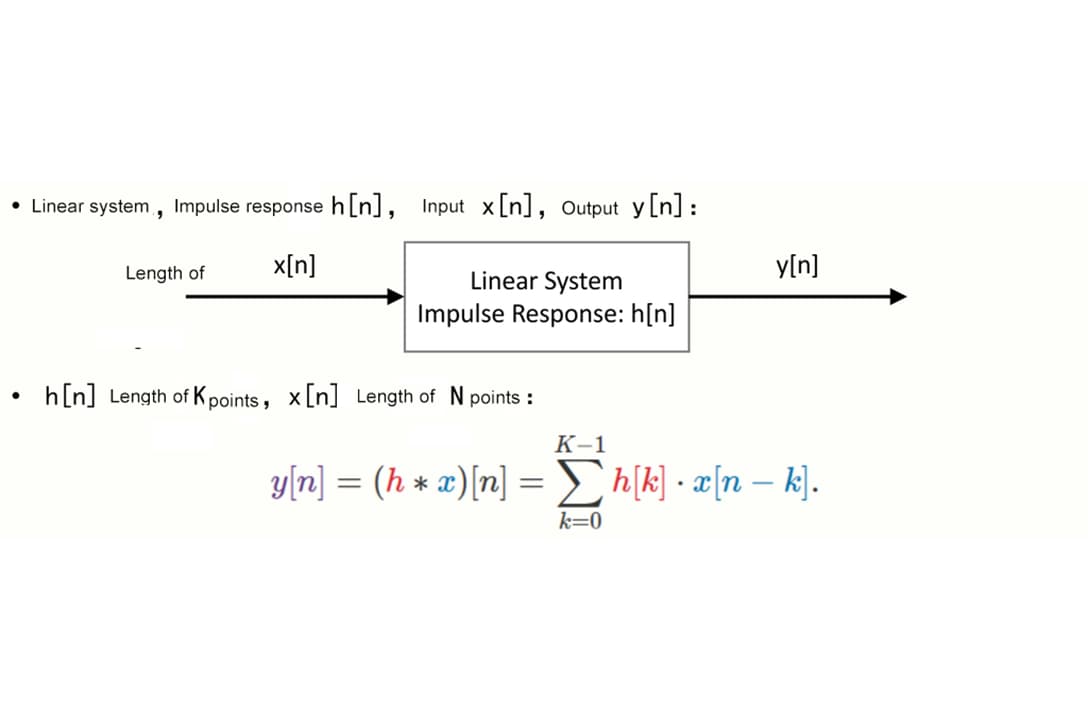
1. Working Principle and Types of Acceleration Sensors An acceleration sensor is a common type of sensor that can measure the acceleration and tilt angle of objects, and is widely used in industries, healthcare, sports, and other fields. Acceleration sensors typically consist of sensing elements, signal processing circuits, and interface circuits, and can sense the acceleration of an object or detect changes in the motion state, converting these data into electrical signals for output. Currently, the market offers two main types of acceleration sensors: analog sensors and digital sensors.The characteristic of acceleration digital sensors is their ease of integration with digital systems. However, sometimes to achieve higher accuracy, lower noise, and to meet different dynamic response requirements, while also controlling costs, we tend to prefer analog output acceleration sensors.Figure 1 shows the processing flow of the signal from a typical analog output accelerometer. Generally, to improve integration and reduce costs, the ADC sampling and digital filtering processing are integrated into the MCU or DSP internally. 2. Design of the Pre-ADC Anti-aliasing Low-pass Filter Adding an anti-aliasing low-pass filter at the front end of the ADC (analog-to-digital converter) is a crucial design in the signal sampling system. According to the Nyquist sampling theorem, the ADC sampling frequency fs must be at least twice the highest frequency fmax of the signal (i.e., fs ≥ 2fmax) to accurately reproduce the original signal without distortion. If the input signal contains components with frequencies exceeding fs/2 (referred to as the Nyquist frequency), these high-frequency components will be "folded" into the low-frequency range, forming false signals (aliasing). Aliasing permanently contaminates the useful signal and cannot be eliminated through subsequent processing. The actual signal may contain noise or useless high-frequency components (such as electromagnetic interference, harmonics), which may exceed fs/2, and even if the input signal itself has a limited bandwidth, the sampling process of the ADC (especially discretization) will introduce quantization noise. The anti-aliasing low-pass filter can reduce the impact of high-frequency noise. The anti-aliasing low-pass filter is actually an RC (resistor-capacitor) low-pass filter, and its cutoff frequency fc is usually set slightly lower than fs/2 but slightly higher than the effective bandwidth of the signal (such as the bandwidth of an accelerometer of 100 Hz, fc is selected as 150 Hz), ensuring that only signals with frequencies below the Nyquist frequency pass through. If the ADC sampling clock frequency is 2 KHz, then the cutoff frequency fc should be set not higher than 1 KHz. The formula for calculating the cutoff frequency fc is fc = 1/(2π×R×C). Using the anti-aliasing low-pass filter to reduce background noise and thereby improve the resolution of the accelerometer. Generally, in the design, the bandwidth is limited to the lowest frequency required by the application to maximize the resolution and dynamic range of the accelerometer.In practical use, if ADI's ADXL103 or ADXL203 is used, the internal low-pass filter is already integrated. The cutoff frequency (-3dB point) is determined by the external capacitor C connected to the output terminal, and only by connecting a capacitor in parallel to the output pin and forming a low-pass filter with the internal output resistor can the anti-aliasing and noise suppression functions be achieved. The actual application circuit is shown in Figure 2, and its corresponding fc = 5 µF/C. 3. Digital Filtering The analog signal passes through an anti-aliasing low-pass filter and is sent to the ADC module. Under the drive of the sampling clock, a continuous data stream is generated. At this time, the data inevitably still contains noise. To filter out the noise, digital filtering technology needs to be adopted to process the obtained data. Compared with analog filters, digital filters usually have more stable frequency responses, can precisely suppress out-of-band signals, have good repeatability, and can be implemented either in pure software or by using hardware acceleration of FIR (Finite Impulse Response) or IIR (Infinite Impulse Response) filters. Digital filtering can be either purely software-based or implemented using hardware acceleration of FIR or IIR.Due to the high order of FIR filters, they consume more computing resources and are more suitable for running on DSP or high-performance MCUs. Their difference equation expression is shown in the following figure. For a 120th-order low-pass FIR filter using a Kaiser window, the stopband attenuation usually reaches over 60dB. Compared to IIR filters, FIR filters have a wider transition band and larger group delay, and their real-time response is not as fast as IIR filters.If the computing resources are limited on an embedded platform or to obtain a steeper transition band, IIR filters can also be used. Compared to FIR filters, IIR filters have higher computational efficiency (can achieve high performance with lower orders), have nonlinear phase changes, and are acceptable for accelerometers, but they may be unstable. The pole positions need to be carefully optimized. The general expression of the difference equation for IIR filters is as shown in the following figure. A 4th-order elliptic IIR low-pass digital filter usually can achieve a stopband attenuation of over 60dB when the passband ripple is 0.5dB.Sometimes, in order to obtain a smooth output result, the output data within a certain window of the aforementioned filter is subjected to recursive average filtering to reduce the influence of noise. Given a signal sequence x[n] containing N samples, where n is the index of the sample (from 0 to N-1). Moving average filtering is performed by sliding a fixed-length window of length M over the signal sequence and calculating the average of the samples within the window. For each position k of the sliding window, the filtered output y[k] can be calculated using the following formula: The size M of the sliding window determines the degree of smoothing. A larger window can more effectively smooth the signal, but it may result in a delayed response; a smaller window can respond to changes in the signal more quickly, but the smoothing effect may be poorer. Usually, when the ADC sampling clock is 2000Hz, M is set to 10.
Read More
Quickly get the product information in one minute In the rapidly changing technological era, precise inertial navigation technology has become a core requirement in fields such as autonomous driving, aerospace, and ocean exploration. The G-F120H high-precision fiber optic gyroscope launched by Micro Magic Inc, with its outstanding performance and reliability, provides stable and accurate navigation solutions for global users, empowering industries to ascend to new heights of intelligence. The G-F120H high-precision fiber optic gyroscope has become a leader in navigation grade applications through the integrated design of optical and electronic components. Taking into account the weight and size of the product, it exhibits excellent inertial performance. By adopting advanced integrated optical technology and FPGA closed-loop electronic circuits, G-F120H achieves better accuracy, noise control, and efficiency than similar technologies. In addition, the internal calibration function of the product further optimizes the thermal suppression effect, while the separation design between electronic devices and FOG sensitive ring components ensures wide environmental adaptability. Core advantage: Breaking through technological boundaries 1. Ultimate precision, steadfast reliability Zero bias stability is as low as 0.002 °/h (1σ, 100s), ensuring high consistency of attitude measurement during long-term operation. Full temperature zero bias repeatability ≤0.05°/h, operating in extreme environments (-40℃ to +65℃) with always-on performance. Random walk coefficient ≤0.001°/√ hr, effectively suppressing noise interference and resulting in purer data output. 2. Rugged durability, fearlessly conquering challenges. Through rigorous mechanical testing, ensure the accuracy and reliability of product operation in complex environments. Random vibration (20Hz~500Hz, each axis vibrates for 15 minutes), the absolute value of the zero-bias value during vibration and the average zero bias value before and after vibration is less than 0.05 °/h. 30g mechanical impact (half sine wave, 10ms), the zero-position change value before and after impact is less than 0.02°/h, ensuring the reliability of high dynamic scenarios such as onboard and airborne. 3. High speed communication, seamless integration Supports RS-422 bidirectional serial communication, with a transmission rate of up to 460.8kbps and strong compatibility. The data frame contains 32-bit valid gyroscope data and 14-bit temperature data, combined with parity check to ensure the integrity and real-time transmission of information. Application scenarios empower diverse fields (1) Drones and Aviation: Provide sub-degree accuracy (0.05°) for onboard heading and attitude systems to ensure flight safety and stability. (2) Ocean navigation: The ideal choice for marine gyrocompasses, with anti-magnetic interference (magnetic field sensitivity ≤ 0.02°/h/Gs) and adaptability to complex marine environments. (3) Industrial automation: precise positioning (1cm accuracy) and speed measurement (0.03m/s accuracy), empowering high-precision motion control for AGVs, robots, and others. Quality assurance: defined by technical standards The G-F120H series strictly follows international technical specifications and offers three models, G-F120H-A/B/C, to meet the accuracy requirements of different scenarios: (1) G-F120H-C: Flagship model with optimal zero bias stability and full temperature repeatability, suitable for aerospace grade high-precision missions. (2) G-F120H-B: Balancing performance and cost, suitable for mid to high end markets such as automotive and marine applications. (3) G-F120H-A: Economical choice, performance still exceeds industry benchmarks, covering industrial automation needs. Choose Micro Magic, Unlock a Precision-Driven Future As a leading global provider of inertial navigation solutions, Micro Magic Inc is driven by innovation and continues to push the limits of technology. The G-F120H fiber optic gyroscope is not only a device, but also a reliable partner for you to move towards the era of intelligence. G-F120 Whatever you needs, Micro-Magic is at your side. --
Read More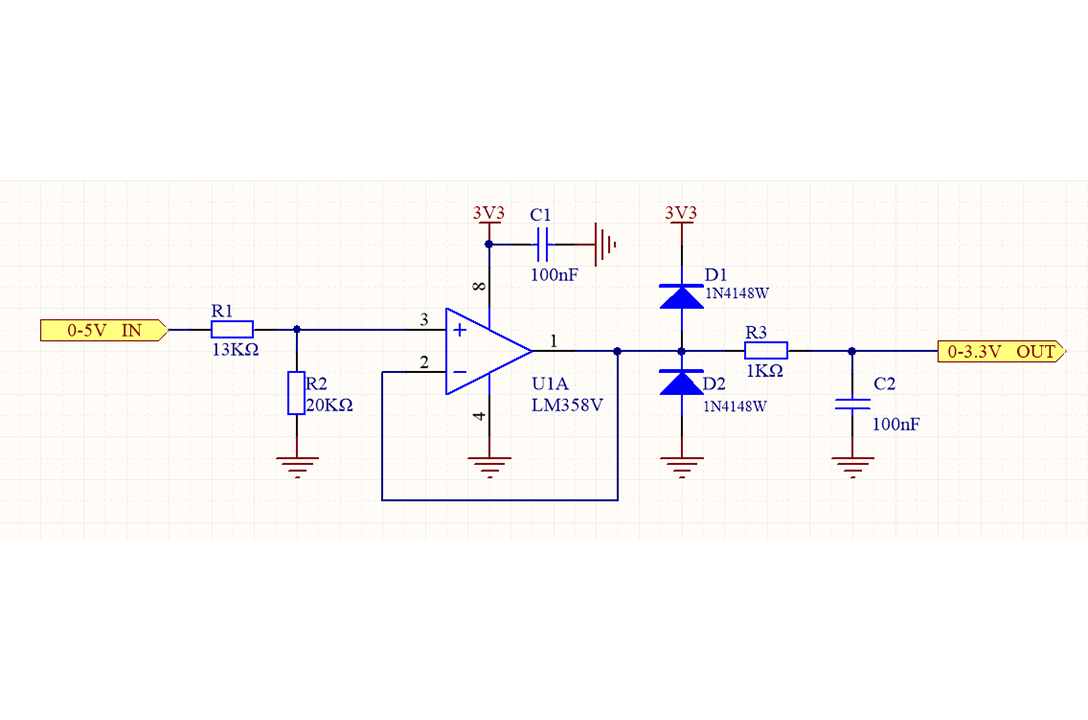
The voltage output type sensor typically outputs a voltage range of 0-5V or 0-10V. If we choose not to use an external ADC conversion chip due to cost considerations but instead sample the ADC module within the MCU chip, but as the voltage range of the AD acquisition in STM32 is 0-3.3V, in this case, we need the sampling circuit as shown in the figure below. In the figure, R1 and R2 form a resistor voltage divider circuit, which converts the input voltage ranging from 0 to 5V into a voltage range of approximately 0 to 3V. The subsequent rail-to-rail operational amplifier voltage follower plays the role of impedance matching, isolating the sensor from the ADC sampling module and reducing signal attenuation. To prevent damage to the subsequent ADC module circuit caused by overvoltage and negative voltage, clamp protection diodes are added to the power supply and ground respectively, ensuring that the input voltage of the ADC module is always within the range of -0.7V to 3.3V + 0.7V. At the same time, to suppress the influence of high-frequency noise, an RC low-pass filter needs to be added before ADC sampling. The cutoff frequency of the low-pass filter should be selected according to the bandwidth of the signal. For example, if the signal bandwidth is 100Hz, the cutoff frequency can be set to 100Hz or slightly higher, such as 1kHz. If R2 is 1.5K and C1 is 100nF, then the cutoff frequency fc is approximately equal to 1KHz.
Read Moreleave a message
Scan to Wechat :